Sports simulator prices vary more than almost any other attraction in a family entertainment centre. The reason is simple enough: you are not buying one product. You are buying a bay, a tracking system, a display setup, a software library and a bit of building work, priced together as a project.
Short answer: There is no single price for a commercial sports simulator. The figure is set by the sport and the space it needs, the tracking system, the display and screen assembly, the software package, and the site work your building requires. For reference, our own September 2026 listing prices run from about USD 1,300 for a compact multi-player archery gallery to about USD 13,500 for a full training bay or multi-player lane set, FOB and with a minimum order of one unit.
Two operators can buy what sounds like the same golf simulator and pay very different amounts. The brand name is rarely the reason. Depth of the bay, the sensor package, how the screen is built, how many sports the system runs and how much site work the venue needs all end up in one quotation.
What follows is how we build that quotation, line by line, so you can read a proposal properly and put two suppliers side by side. Where a number depends on your venue, we say so. Where it depends on configuration, we say that too.
Why the range is so wide
A boxing unit that measures punch force needs about 4 m by 4 m and a power supply. A multi-sport bay with a projection wall, motion tracking and a ball return needs a dedicated room, controlled lighting and a floor that can take a fixed base.
We build from roughly 5 square metres up to full-room installations over 80 square metres. Across that span, “the price of a sports simulator” is not a useful phrase. The useful one is the price of this sport, in this room, at this level of immersion.
Published price ranges for this category do exist online, and they are worth reading once. Most are not tied to a sport, an area, a configuration or a destination country, so they work as a starting point for a conversation and poorly as a budget. Two venues can sit inside the same published tier and get very different value for their money.
What our systems cost
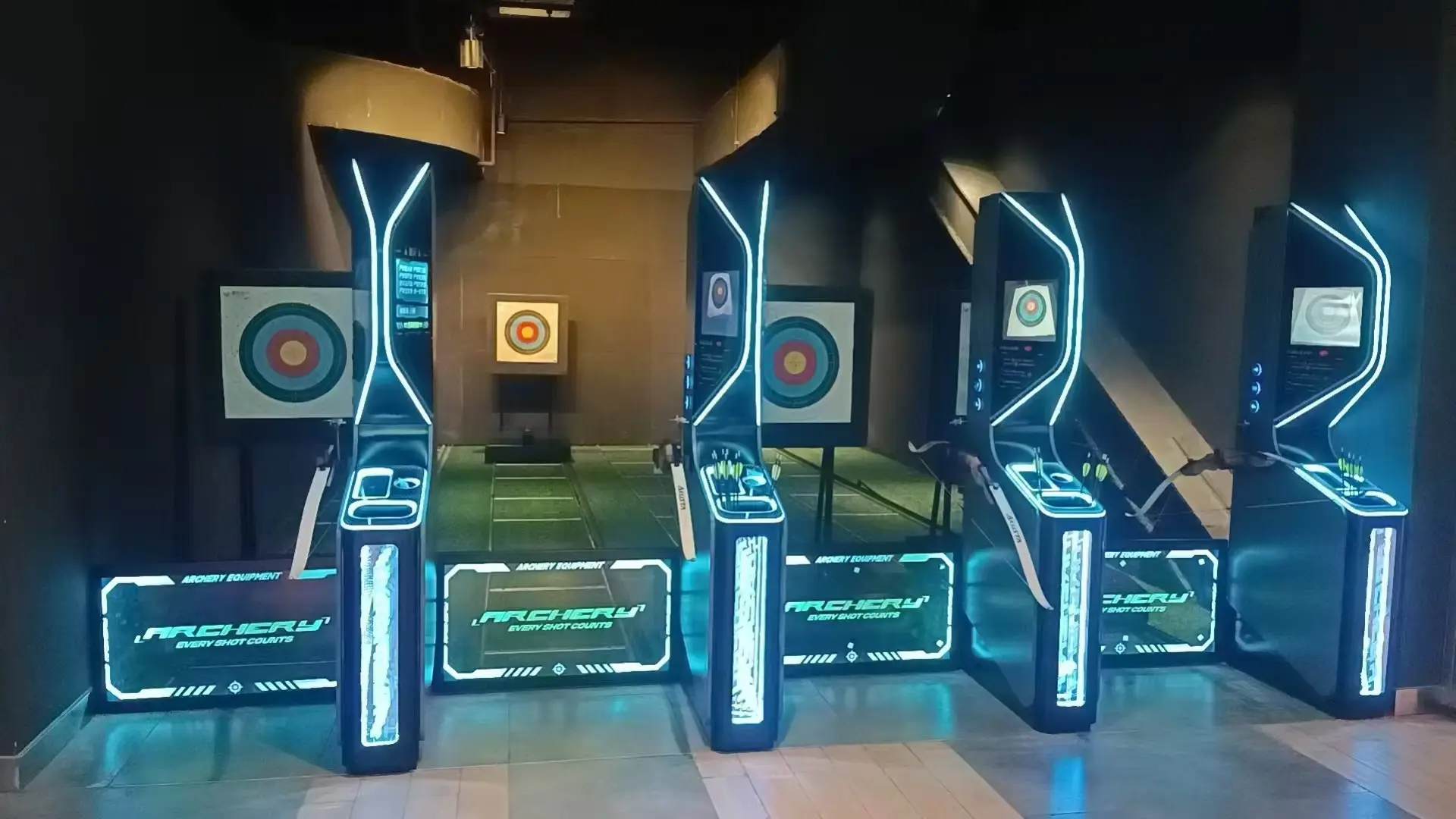
The figures below are our own, taken from our September 2026 export listing prices. They are FOB, minimum order one unit, and they move with configuration.
Taken together, the working range sits at roughly USD 1,300 to USD 13,500 per system. Compact single-sport units and gallery formats occupy the bottom of that range. Enclosed bays, multi-player lane sets and full sports halls occupy the top. Golf and bowling systems are quoted against a bay drawing rather than listed flat, so ask for the layout if either is on your shortlist.
If these numbers look lower than the ranges published by venue suppliers in North America and Europe, that is usually the commercial layer rather than a different machine. Reseller margin, local installation and service contracts, and quotes that include the room build rather than the equipment alone all push a published price up. When you compare a factory quotation with a domestic turnkey figure, compare what sits inside each one.
What actually drives the cost
Start with the sport, because it sets everything downstream. Anything where a real ball leaves a club, bat or foot at speed needs depth, headroom and a screen that can absorb the impact. Golf and baseball are the two that eat space. Boxing, archery and badminton fold into far less room, and their prices reflect it. The constraint buyers forget is height. A bay can fit your floor plan perfectly and still fail once you allow for the swing arc and the volume the sensors need to see.
Then there is the tracking system, the heart of the machine and the widest line in any quotation. Entry-level setups watch a limited area with a handful of sensors. Better ones add sensors and processing so that a shot is read properly when it is struck off-centre, at speed, or by a left-handed player on a machine configured for a right-handed one. Test this in person if you can. If you cannot, ask what the system does when the ball is hit near the edge of its capture zone, and listen to whether the answer comes easily.
Display comes next. Projector and screen is one route, a direct-view display another. Your venue’s ambient light decides between them. Projection in a controlled bay looks superb and washes out under mall lighting, which is why lighting control belongs in the equipment budget rather than in the fit-out afterthought column.
The enclosure and the screen take the punishment, because every ball you will ever sell hits them. Screen material, the frame behind it, netting above and at the sides, and how the structure is anchored all show up in the price. They show up again in two years, when a cheap assembly has been patched twice.
Software decides whether the machine is still interesting in month eight. Licensing usually runs per system or per bay, and the number of sports bundled changes both the price and how many units you need for the same floor. Ask how updates arrive, and what happens in year two.
Site work is the line buyers most often leave out when they compare quotes. Levelling, a base or pit, power, network cabling, lighting control, calibration time. In a finished building this can be modest. In a shell unit it can approach the equipment cost, which is how a quotation that looked cheap on paper stops looking cheap.
Freight and access matter more than people expect. Simulators ship in protected sections, and section sizes are limited by door widths, stairwells and lifts. An upper-floor venue with a narrow service lift is a different job from a ground-floor unit with a loading bay.
What a proper quotation should itemise
Ask every supplier for the same structure. A quote that arrives as one number cannot be compared with anything.
Getting a quote you can compare
Four steps produce a quotation that means something:
- Measure the room, including ceiling height, door widths and lift access.
- Decide the sport and the level of immersion: single-sport unit or multi-sport bay.
- Send the measurements and ask for a bay drawing with an itemised quotation against it.
- Agree in writing who handles power, base, lighting control, network and customs clearance.
Suppliers who quote before step three are guessing, and their numbers will move once the drawing exists.
Comparing two quotes without getting fooled
Put both quotations into the same table. The cheaper one is usually missing something specific: a screen built for a lighter ball, a narrower capture zone, installation left out, consumables treated as yours, or a software licence that quietly ends after twelve months.
One number is worth asking for on top of the price, and it appears in very few proposals: what the bay costs to run for a year. Mats wear through. Balls split or walk away. Screens take repeated hits in the same place until a seam fails. Sensors drift and need recalibration after a deep clean. A supplier who can estimate all of that has thought past delivery day.
What a simulator earns
Throughput decides revenue, and the arithmetic is the same whatever the sport:
Visitors per hour = 60 divided by the average session length in minutes, multiplied by players per session Revenue per hour = ticket price multiplied by visitors per hour
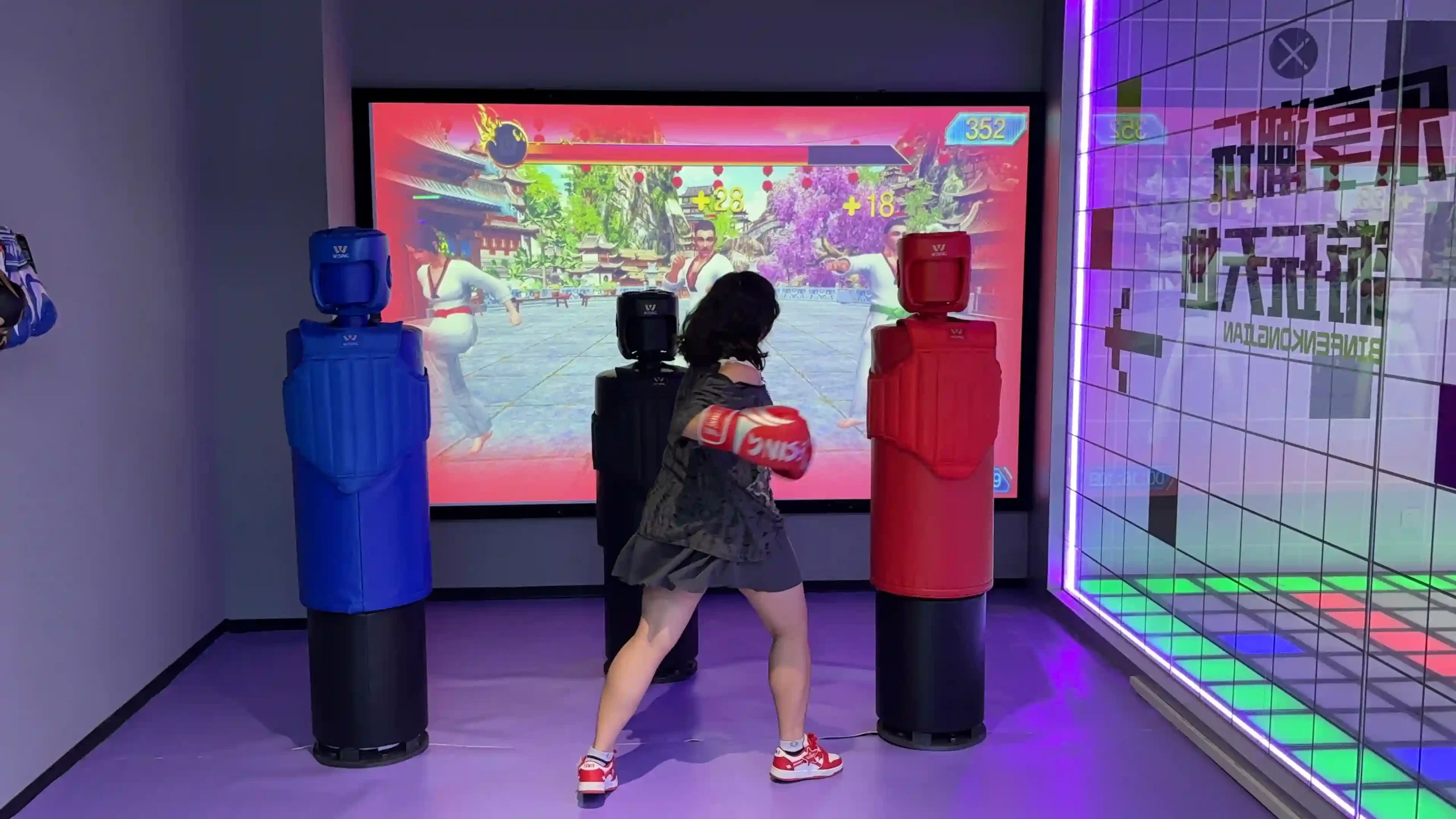
Every input belongs to your venue, which is why nobody can hand you a payback period from a catalogue. What the sport changes is the rhythm. Boxing and archery turn over fast, use little space and live on foot traffic. Golf and baseball hold a bay longer, take higher ticket prices, and perform better on bookings, leagues and corporate events than on passing trade. Multi-sport systems sit in between: slower per sport, but regulars get variety, and your quiet hours get a reason to exist.
Two things matter more than the ticket price. Can people in the aisle see other people playing? Is the bay bookable? Venues that take bookings earn from groups, and groups are the least seasonal money a simulator makes.
If you want to model the whole venue rather than a single machine, the venue-fit and revenue detail sits in our guide to choosing commercial sports simulation equipment for different venues.
Which simulator fits which venue
A shopping mall and a golf lounge want different machines, and the deciding factors are floor area, dwell time and who is paying.
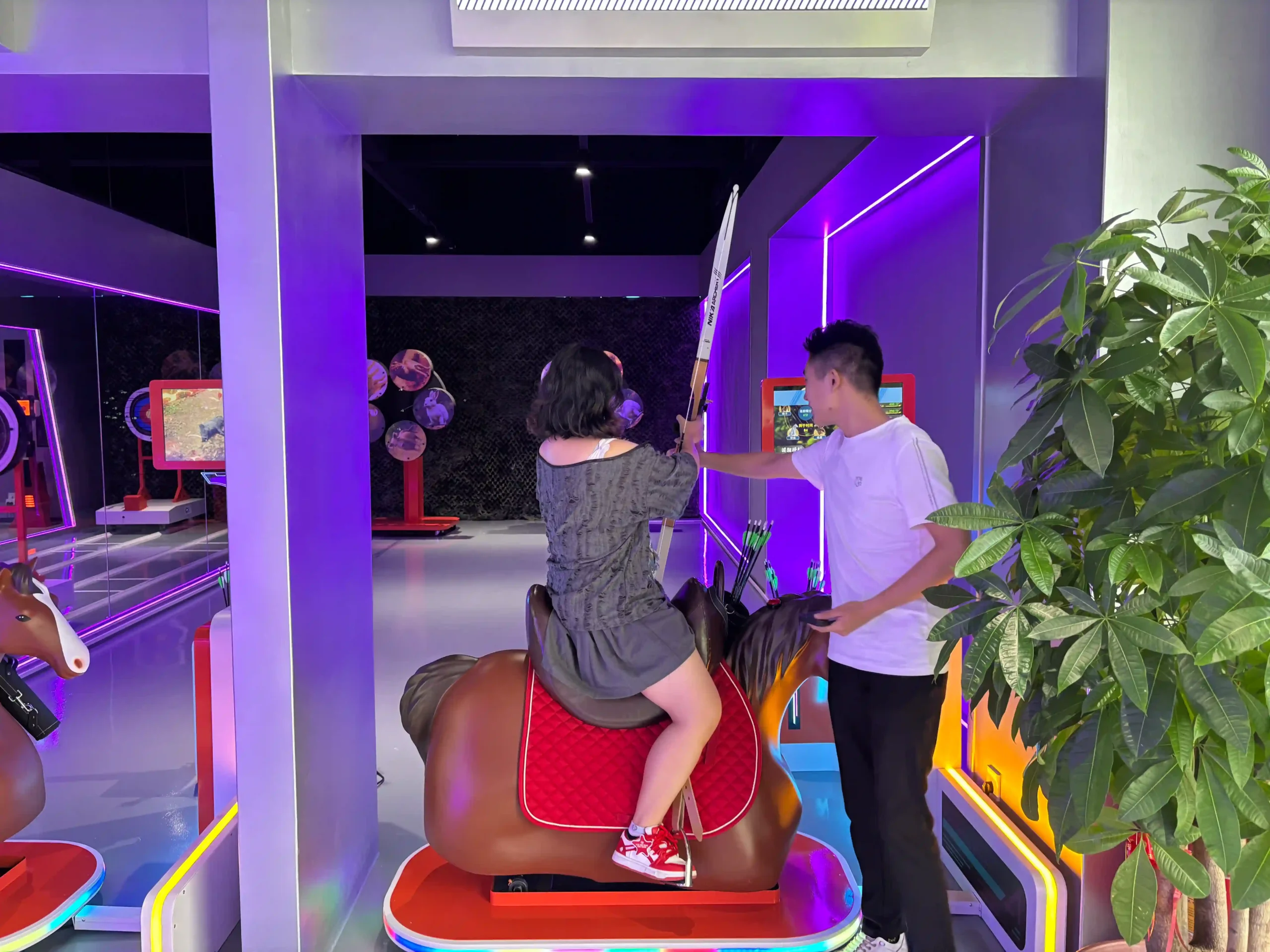
In practice, a mall usually starts with a compact unit such as a boxing simulator or an archery simulator, while an FEC building an anchor attraction looks at a bowling simulator or a multi-sport bay. Sports bars and lounges tend to want golf or football on a bookable bay, because a session lasts long enough to sell food and drink alongside it.
Choosing a supplier
Weight the proposal, not the brochure. Confirm whether you are dealing with the manufacturer or a reseller, and ask who supplies spare sensors and screens two years from now. Ask for the bay drawing before you pay a deposit, written specifications for tracking and screen, the power and network requirements, and a commissioning checklist. Ask what remote diagnostics can and cannot fix, because a fault in a venue 8,000 km away is a support question rather than a warranty argument.
For context on one supplier, AMA GAME is the active gaming and amusement equipment brand of Guangzhou AMA Amusement Equipment Co., Ltd., a manufacturer founded in 2009. The company builds digital sports simulators for FECs, malls, sports clubs and resorts, covering golf, baseball, bowling, boxing, tennis and badminton systems, with OEM and ODM customisation for distributors and project contractors.
Frequently asked questions
How much does a commercial sports simulator cost?
No single figure exists, because a simulator is quoted as a bay rather than sold from stock. As a reference, our September 2026 listing prices run from about USD 1,300 for a compact multi-player archery gallery to about USD 13,500 for a full training bay or lane set, FOB, minimum order one unit. The sport, the tracking system, the display and screen, the software package and your site works all add to that figure. Ask for the bay drawing and the itemised quote that goes with it.
Which sports simulator is the cheapest to install?
Gallery and single-lane formats, as a rule. In our current listings a multi-player archery gallery runs USD 1,300 to 2,200 and a single basketball lane USD 2,000 to 2,257, while a boxing power-test unit sits at USD 5,000 to 8,055. Golf, baseball and football go the other way, because depth, headroom and screen protection all cost money. Cheap to install is not the same as good to own, though. Check what a machine earns per hour before you let the installation price decide.
Do I need a dedicated room for a sports simulator?
Not for every unit. A compact single-sport machine can stand on an open arcade floor. Anything where a real ball flies needs an enclosure, impact protection, controlled lighting and enough height. Send a floor plan and ceiling height and you will get a layout for the room you actually have.
How much space does a commercial golf simulator need?
It depends on the enclosure and the tracking volume, and suppliers publish different numbers, so work from the drawing. AMA GAME specifies a golf bay at about 6 m by 5 m with 3 m of headroom. Height and swing arc matter as much as floor area.
What ongoing costs should a venue budget for?
Mats, balls, tees and gloves, occasional screen repair, sensor recalibration, and software updates after year one. There are no motors to service, so running costs stay low next to a ride. They are not zero. Get a twelve-month estimate in writing before you sign anything.
Can one system run several sports?
Yes. One bay can run golf, football, baseball and more on the same hardware, which is how operators fit more sports into less floor. It costs more than a single-sport build, and the deepest sport in the package sets the room you need.
How long does delivery and installation take?
Drawing approval, specification and site readiness drive it more than the factory does. Ask for a written schedule covering drawing approval, production, crating, shipping, site preparation and commissioning, and make sure each stage has a name against it. Most delays come from the site, not from production.
What should be checked before paying a deposit?
Five things, in writing: the bay drawing for your actual room, specifications for tracking, display and screen, the software licence terms, the twelve-month running estimate, and the warranty and spare-parts process. No drawing, no deposit.
This guide describes how we build quotations from our own export process rather than from third-party estimates. Ask for the numbers in writing, against your drawing, and the comparison stops being guesswork.
If you have a floor plan and a ceiling height, send them through the contact page and we will come back with a bay layout and a project quotation instead of a range. Our guides to VR arcade machine costs and commercial mirror maze costs cover the other attraction categories the same way.