There is no single winner between a 9D VR simulator and a 5D cinema, and anyone who tells you otherwise is selling one of them.
A 9D VR simulator earns its place in venues that want personal or small-group, interactive VR: motion seats or capsules, headset or near-field visuals, and gameplay that the player drives. A 5D cinema earns its place in venues that can dedicate real floor area to a group motion-theater: rows of moving seats, a large shared screen, and synchronized environmental effects that a whole audience experiences together.
The right choice comes down to your venue type, available space, target audience, ticket model, content strategy, staffing and budget — not to the letter “D” in the product name. Below we compare the two formats on the factors that actually decide a purchase, and we say plainly when something depends on the specific configuration.
9D VR Simulator vs 5D Cinema at a Glance
Where a cell says “varies by model” or “depends on configuration,” treat that as the honest answer — there is no single industry standard for either format.
First, a Naming Reality Check: “9D” and “5D” Are Not Standards
The terms “5D” and “9D” are marketing and product-category labels more than universal technical specifications. Different manufacturers use the “D” loosely: one maker’s “9D” line can be single-seat motion simulators, another’s “9D” can be a multi-seat cinema ride with no headset at all. A “5D cinema” from one factory may seat eight; from another, forty.
Judge equipment by what it actually contains: motion platform, seat movement, visual system (headset, screen, or projection), sound, environmental effects, interactive features, and the software or content library. The label alone does not tell you that a 9D unit is more advanced than a 5D unit — only the spec sheet and a live demo can do that.
Where the Two Formats Genuinely Differ
Immersion works differently, not necessarily “more” or “less.”
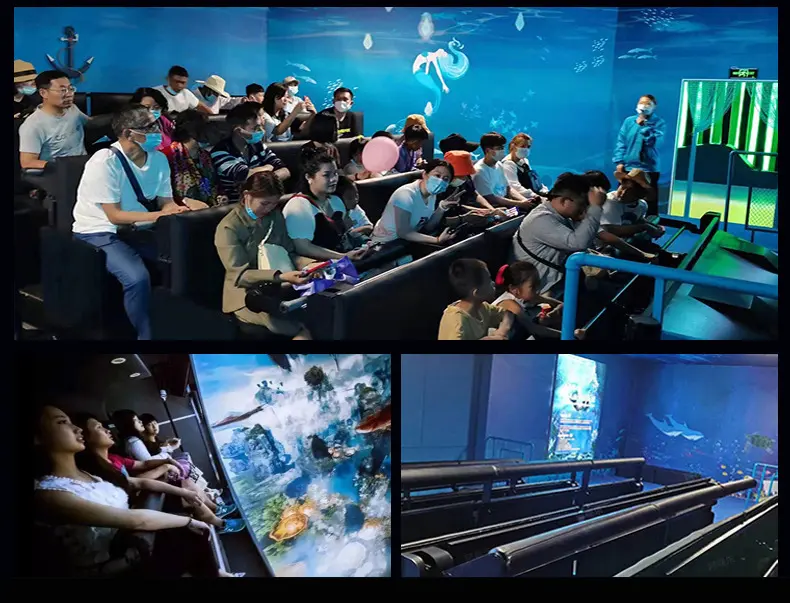
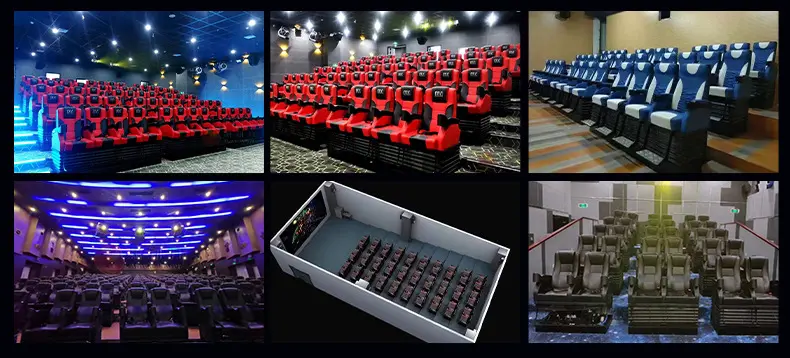
On typical 9D VR simulators the player wears a headset or sits inside a near-field motion capsule, so the outside world disappears and each player gets a private visual world. On a 5D cinema, everyone watches one large screen together while seats move and effects — wind, mist, scent, seat vibration — fire in sync. Ask which experience your customer base wants: “I was inside the game” is a different memory from “we screamed together on that ride.”
Interaction is the biggest practical gap.
Most 9D simulators are games: the player steers, shoots, or rides, and the outcome changes with their input. Most 5D cinemas are shows: the audience rides along with a fixed film. If your customers queue for gameplay and replays, that points one way; if they queue for a spectacle they can enjoy with zero skill, that points the other.
Player capacity and space tell different stories.
A single 9D unit typically serves one to four players at a time and needs a relatively compact footprint, so you scale by adding units side by side. A 5D cinema serves a whole group per show but asks for a dedicated room — screen, rows of seats, and the soundproofing and layout that come with it. One is a machine you place; the other is a small venue you build.
Which Fits Which Venue?
FEC. Both work, and mid-size FECs often run one of each. Simulators feed the pay-per-play culture and turn over quickly between school groups; a 5D theater gives party bookings and families a scheduled “show” that anchors the middle of the venue.
Shopping mall. A compact VR row suits mall kiosk and common-area footprints where every square meter carries rent. A 5D cinema belongs in a mall only when you can negotiate a dedicated space — it becomes a destination, not an impulse buy.
Arcade. 9D simulators sit naturally beside other arcade machines, share the same ticketing and attendant model, and fit the operator’s existing habits. A 5D cinema is a bigger operational step for a pure arcade.
Amusement and theme parks. Parks favor throughput and spectacle at scale; multi-seat cinema rides and rows of simulators both appear, chosen by ride-rotation targets and space. Simulators offer variety and shorter queues per seat; cinema attractions deliver large group waves.
Cinema operators. A 5D theater extends an existing screening business with a differentiated, shorter-format attraction and reuse of cinema operational skills. VR simulators diversify the offer but do not reuse a cinema’s core workflow.
Tourist attractions and indoor entertainment centers. Group shows fit tourist flow — fixed showtimes, batch ticketing, high per-hour capacity. VR zones suit venues whose visitors come for open-ended play rather than a timed program.
In every case the deciding inputs are the same: how much floor area you can commit, how your customers pay, and whether your staff can run scheduled shows or would rather manage self-serve gameplay.
What the Investment Actually Looks Like
No honest article will print a universal ROI for either format, because revenue depends on equipment configuration, local market, ticket pricing, venue traffic, operating hours, utilization and business model — not on the format label.
What we can give you is transparent reference pricing from our own export catalog, so you can sanity-check quotations. These are FOB Guangzhou bands from AMA GAME’s September 2026 list (configurations change prices):
- 9D VR racing simulator, single seat: roughly 3,850
- 9D VR egg chair, 1–2 seats: roughly 4,500
- 9D racing with 6-DoF motion and 3 screens: roughly 7,800
- Multi-player 9D VR shooting systems: roughly 10,500
- Multi-seat 5D/9D cinema attractions: roughly 30,000
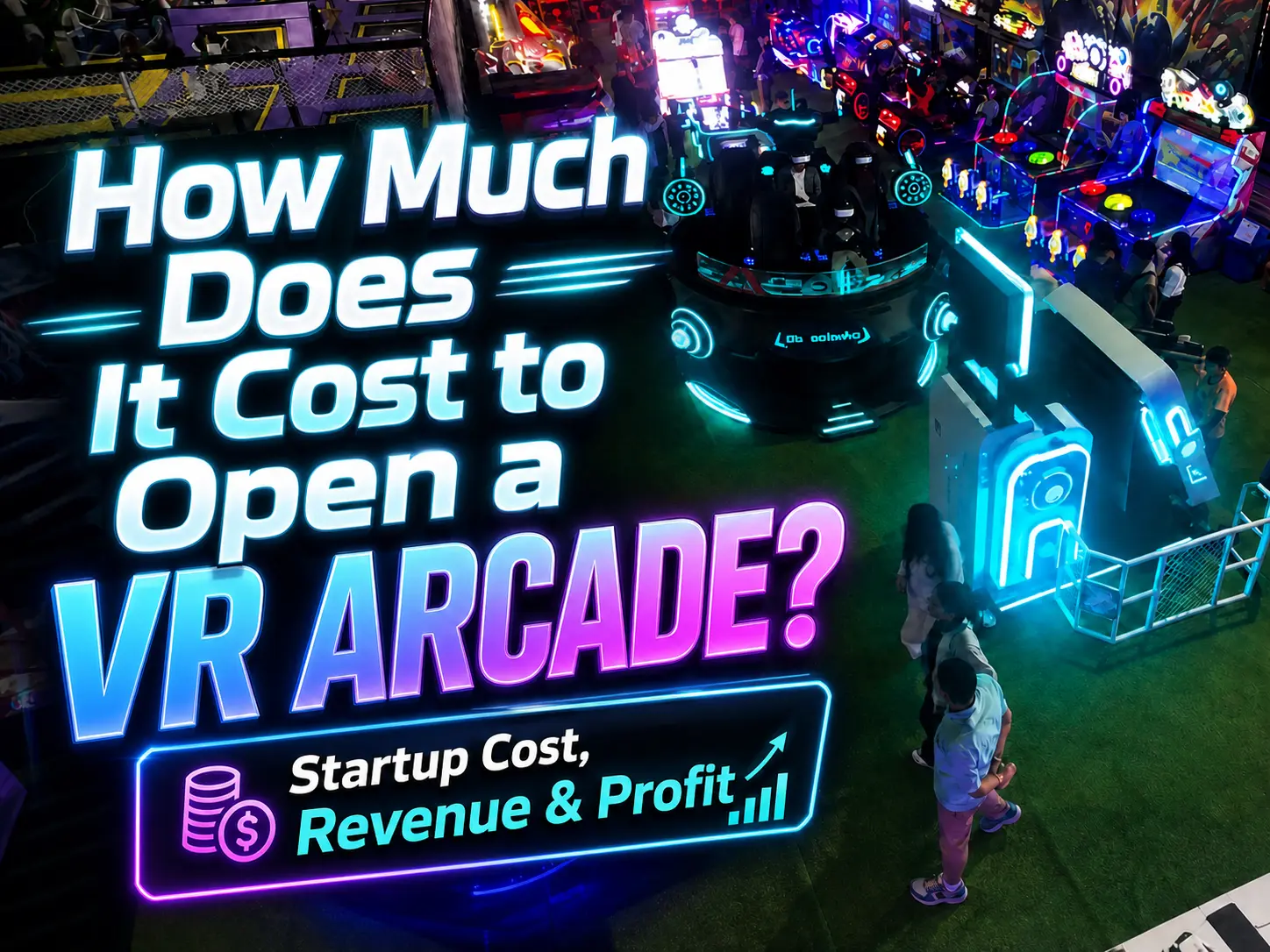
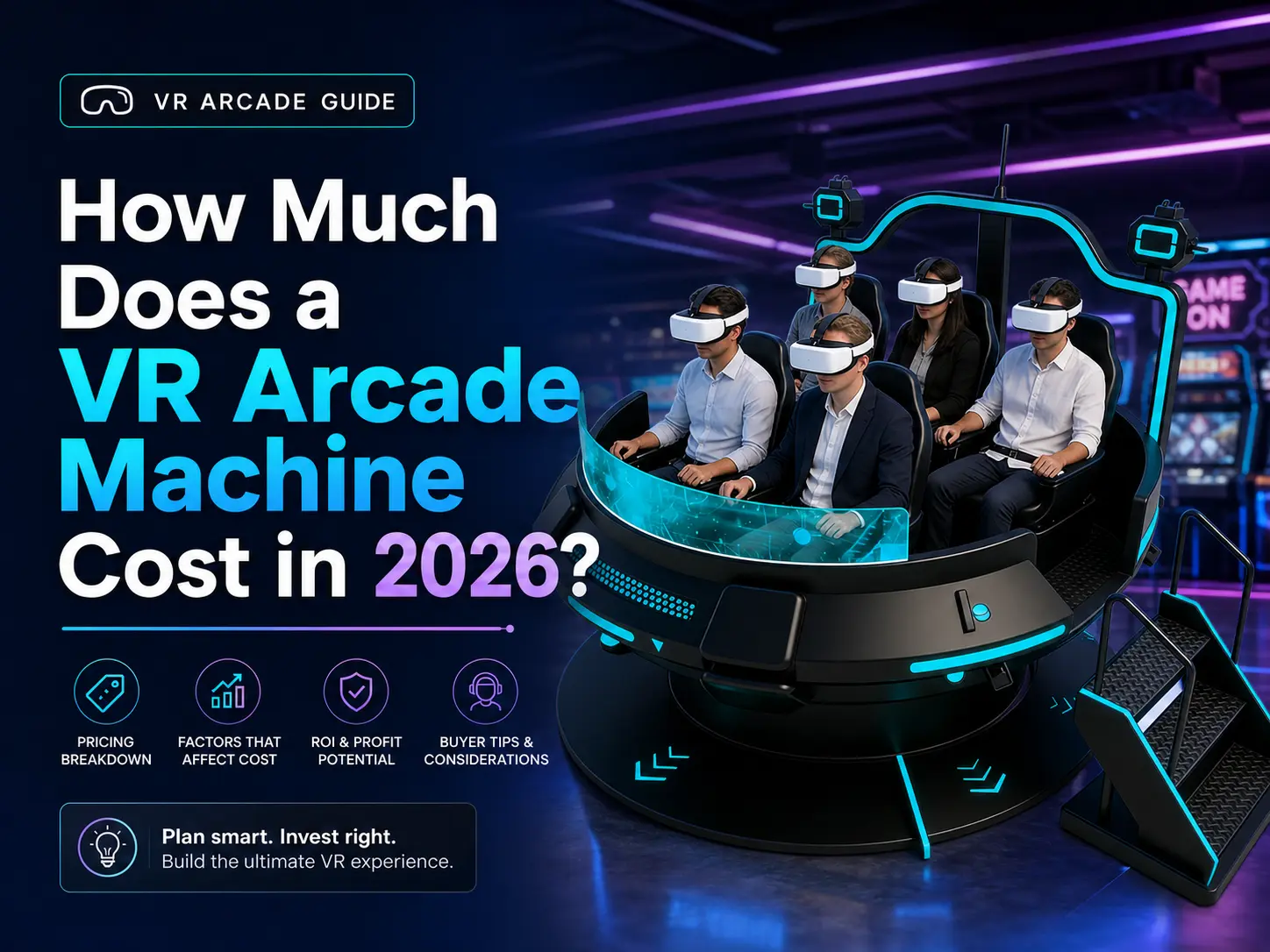
Use bands like these to size the decision, then add the layers every quotation leaves out: freight and insurance, import duties, room preparation (electrical, layout, soundproofing for theaters), installation, spare parts, and content. A deeper breakdown of these cost layers and a worked example is in How Much Does a VR Arcade Machine Cost in 2026?, and for zone-level budgets from a two-unit setup to a full VR room, see How Much Does It Cost to Open a VR Arcade? (Startup Cost, Revenue & Profit).
Throughput math is worth doing on paper before you buy. A two-unit 9D zone running four-minute sessions has a theoretical ceiling around 30 plays an hour; a ten-seat 5D theater running eight-minute films has a theoretical ceiling near 75 guests an hour. Those are arithmetic ceilings assuming continuous occupancy — real utilization is set by your traffic, and theaters pay for their capacity with scheduled staff and a dedicated room.
The operational texture differs too. VR zones need headset hygiene between players, sensor checks and occasional motion-unit service, but they run without a show schedule. 5D theaters need an operator per show block, projector and effects-system upkeep, and a content plan — a film library that stays fresh, because a fixed show loses its pull faster than a game library with new titles.
Choose a 9D VR Simulator If…
- Your priority is interactive, player-driven VR rather than passive viewing.
- Space is tight and you want to scale in small increments per unit.
- Your audience skews to teens and young adults who replay games.
- Your operation is pay-per-play with shared staffing.
Choose a 5D Cinema If…
- Your priority is a group spectacle that families and mixed-age crowds share.
- You have floor area and budget for a dedicated theater room.
- You can run scheduled shows and want high guests-per-hour capacity.
- Your business model is closer to a mini-cinema or timed attraction.
Consider Both If…
You are building a larger entertainment project and the numbers for space, traffic and staffing support two attractions with different dayparts — simulators for casual walk-in play, a theater for parties, events and off-peak scheduled shows.
Which One Should You Buy?
- If your priority is per-play turnover in a compact footprint → consider a row of 9D VR simulators.
- If your priority is group capacity and a scheduled show experience → consider a 5D cinema.
- If your venue is an arcade, mall common area or small FEC zone → the practical starting point is a 9D simulator.
- If your venue is a mall with a dedicated space, a tourist attraction, or a cinema operator → evaluate a 5D cinema against your room-prep budget.
- If you are planning a larger entertainment project → evaluate both on the same spreadsheet: space per seat, staff cost per operating hour, content renewal cost, and the price bands above — then let the venue numbers, not the product labels, make the call.
How to Choose a 9D VR Simulator or 5D Cinema Supplier
Buying either format is a B2B equipment decision, so evaluate the supplier the way you would any capital purchase. Check: whether they are the manufacturer or a trading company (and what that means for spare parts); written specifications for the motion platform, display or VR configuration, and seat movement; the content library and how updates or licensing work; software reliability and UI language options; customization (OEM/ODM) for branding and themes; safety features; certifications for your destination market; installation support and packaging for export shipping; warranty terms; spare-parts availability; and after-sales response. A supplier who cannot answer these in writing is not ready for your project.
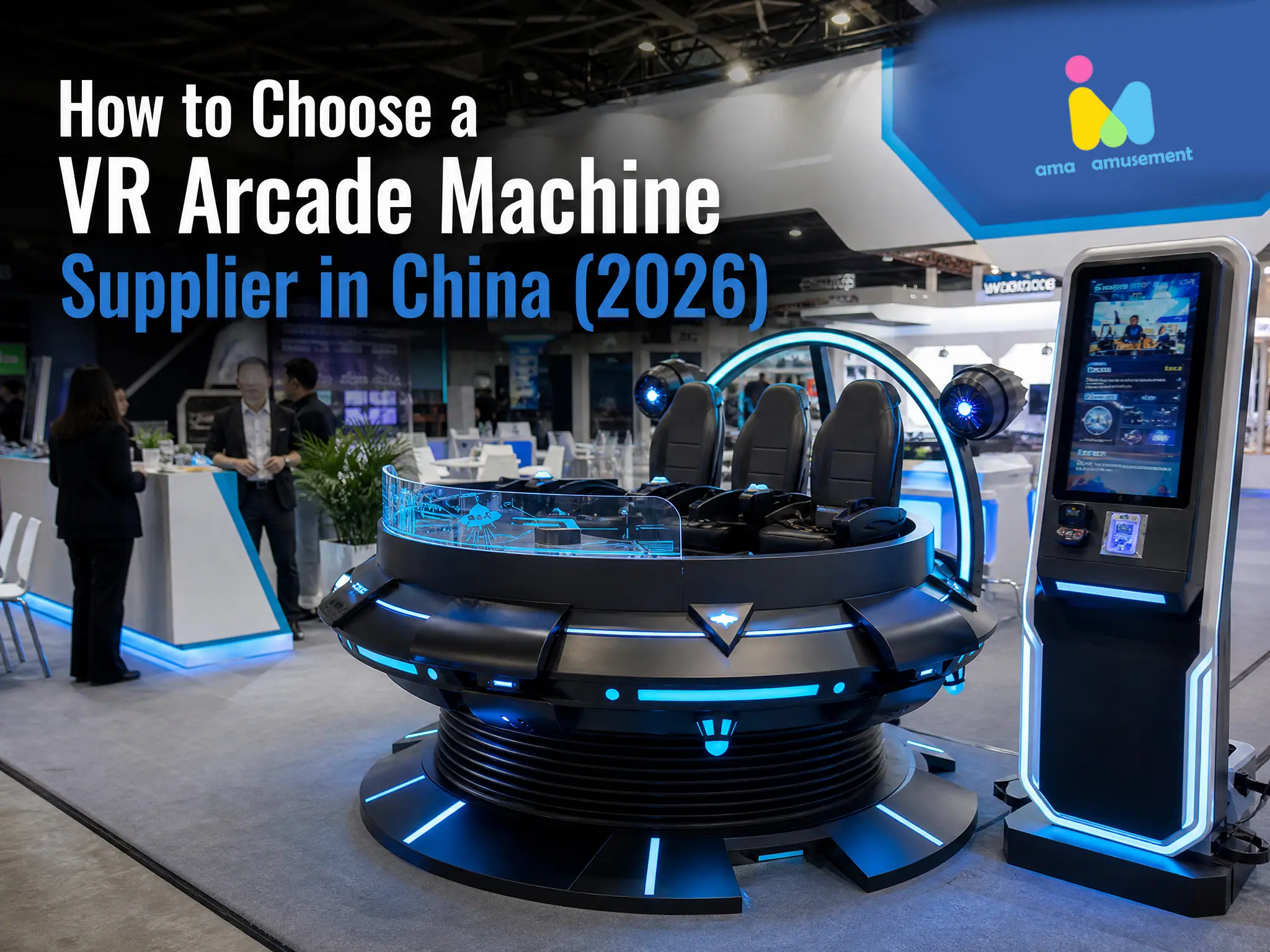
For context on one supplier you might evaluate: AMA GAME is the VR and active-gaming brand of Guangzhou AMA Amusement Equipment Co., Ltd. (founded 2009), which manufactures interactive gaming, sports simulator, VR and mirror maze equipment for FECs, malls and distributors. The company publishes its factory profile, product specifications, and quality-testing documentation on ama-game.com. That is not a claim to being the biggest or the best — it is an invitation to run the same checklist on us that this article recommends you run on everyone. For the full verification framework, see How to Choose a VR Arcade Machine Supplier in China (2026).
FAQ: 9D VR Simulator vs 5D Cinema
What is the difference between 9D VR and 5D cinema?
9D VR simulators typically give one to four players an interactive, motion-based VR experience with headset or near-field visuals and player-driven gameplay. 5D cinemas seat a larger group in front of a shared screen, with synchronized motion seats and environmental effects playing a fixed film. Neither label is a standard, so confirm the actual configuration with each manufacturer.
Is 9D VR better than 5D cinema?
Not universally. A 9D VR simulator fits venues that want compact, interactive, replayable VR with pay-per-play operation. A 5D cinema fits venues that have room for a dedicated theater and want group capacity with scheduled shows. The better choice depends on your space, audience, staffing, content plan and budget rather than on the format name.
Which is more immersive, 9D VR or 5D cinema?
They immerse differently. Headset-based 9D VR blocks the outside world and gives each player a private visual environment, which many users describe as deeper personal immersion. A 5D cinema creates shared immersion: one screen, moving seats and synchronized effects experienced together. Which feels stronger depends on the user, so match the format to the experience your customers expect.
Which is better for an FEC?
Many FECs run both. A 9D VR simulator suits pay-per-play culture, small footprints and fast turnover between groups. A 5D cinema suits families, party bookings and scheduled “show” attractions, but it needs dedicated floor area and an operator. Start with a simulator if space or staff is limited; add a theater when the venue can support a timed show program.
Which requires less space, 9D VR or 5D cinema?
Typically a 9D VR simulator, since one unit serves one to four players in a comparatively compact footprint and you expand by adding units. A 5D cinema requires a dedicated room for the screen, rows of seats and audience flow, plus sound and layout preparation. Exact dimensions vary by model, so request footprint drawings before comparing.
How much does a 9D VR simulator cost?
As a reference, single-seat 9D racing simulators in AMA GAME’s September 2026 export catalog run roughly 3,850 FOB, and 9D egg chairs roughly 4,500; higher-spec motion and screen configurations cost more. Prices vary by manufacturer and configuration, and the final budget must add freight, import duties and installation. Request written quotations from several suppliers.
How much does 5D cinema equipment cost?
Multi-seat 5D and 9D cinema attractions in AMA GAME’s September 2026 catalog are priced from roughly 30,000 FOB depending on seat count, motion and screen configuration. Market pricing varies widely because theater size and effects differ between manufacturers. Budget also for room preparation, projection and effects upkeep, and content licensing. Confirm total landed cost before committing.
Can a 5D cinema accommodate more people than a 9D VR simulator?
Usually yes per show: a 5D cinema seats a whole group — often six to over forty depending on the model — and processes them in scheduled batches. A 9D VR simulator serves one to four players per unit at a time, though multiple units side by side raise total capacity. Compare guests-per-hour at your expected utilization, not just seats.