Choosing a VR arcade machine supplier in China should start with verification, not price.
Before paying a deposit, you should be able to answer four basic questions: Who is the legal seller? Who actually manufactures the equipment? How is the machine tested before shipment? Who will provide technical support and spare parts after delivery?
Once these questions are clear, it becomes much easier to compare quotations. A lower price may simply mean a different computer, VR headset, display, motion platform, cabinet material, game package or level of after-sales support.
This guide explains how to evaluate a commercial VR arcade machine supplier in China, how to compare suppliers on equal terms, what warning signs to look for, and what information should be confirmed before you place an order. It also uses Guangzhou AMA Amusement Equipment Co., Ltd. and its AMA GAME brand as a real supplier example.
Quick Answer
The most reliable way to choose a VR arcade machine supplier in China is to verify seven areas before placing an order: legal company identity, actual manufacturing capability, production testing, applicable certifications, customization capability, spare-parts support and after-sales service.
Do not compare suppliers by machine price alone. Ask every supplier to quote the same configuration and compare the equipment, shipping, warranty, spare parts, customization and technical support together.
Why Supplier Verification Matters More Than Price
For one machine, supplier research may feel unnecessary. For a family entertainment center, shopping mall, arcade, cinema or multi-location entertainment business, however, supplier selection can affect the project long after the equipment arrives.
Imagine a venue with ten VR arcade machines. If one machine develops a hardware problem during its first year, the cost is not limited to the failed component. The machine may be unavailable while the problem is diagnosed, replacement parts are shipped and repairs are completed. The venue may also lose revenue during peak operating hours.
The same applies to the initial quotation. Two machines can look very similar in photographs while using different internal components and different software configurations. A machine with a lower purchase price is not necessarily the lower-cost option over its operating life.
For commercial buyers, the better approach is to verify the supplier first, confirm the equipment configuration, understand the support structure and then compare the price.
Verify the Company Behind the Quotation
Legal Identity: Who Signs the Contract and Receives Payment?
Start with the paperwork.
Ask for the supplier’s full legal company name, business license, registered address, factory address, contract entity and payment entity. Compare those details across the quotation, contract, invoice and payment instructions.
An office, showroom and factory do not always have to be at the same address. That is not automatically a problem. What matters is whether the supplier can clearly explain the relationship between them.
The same principle applies when a company describes itself as a manufacturer. Ask which products are produced in its own facility and which products are sourced from another factory.
The three questions that matter most are simple:
Who manufactures the equipment?
Who is responsible for its quality?
Who provides technical support after delivery?
A trading company can be a legitimate sourcing partner. It may provide useful services such as product integration, logistics and project coordination. The real risk is not the business model itself. The risk is not knowing who is responsible for the equipment you are buying.
Production Capability: Ask for Evidence, Not Just Photos
Product photographs do not prove manufacturing capability.
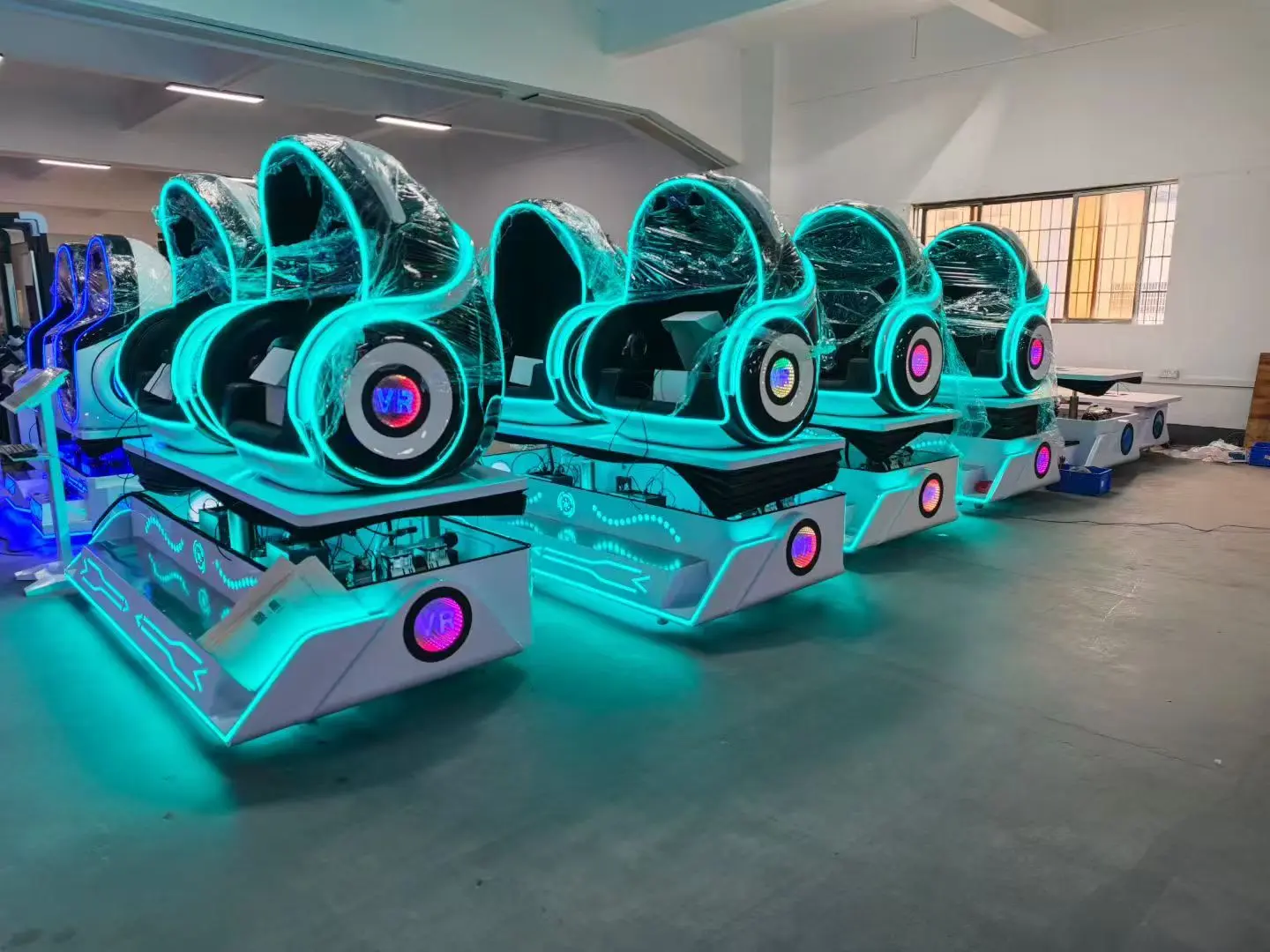
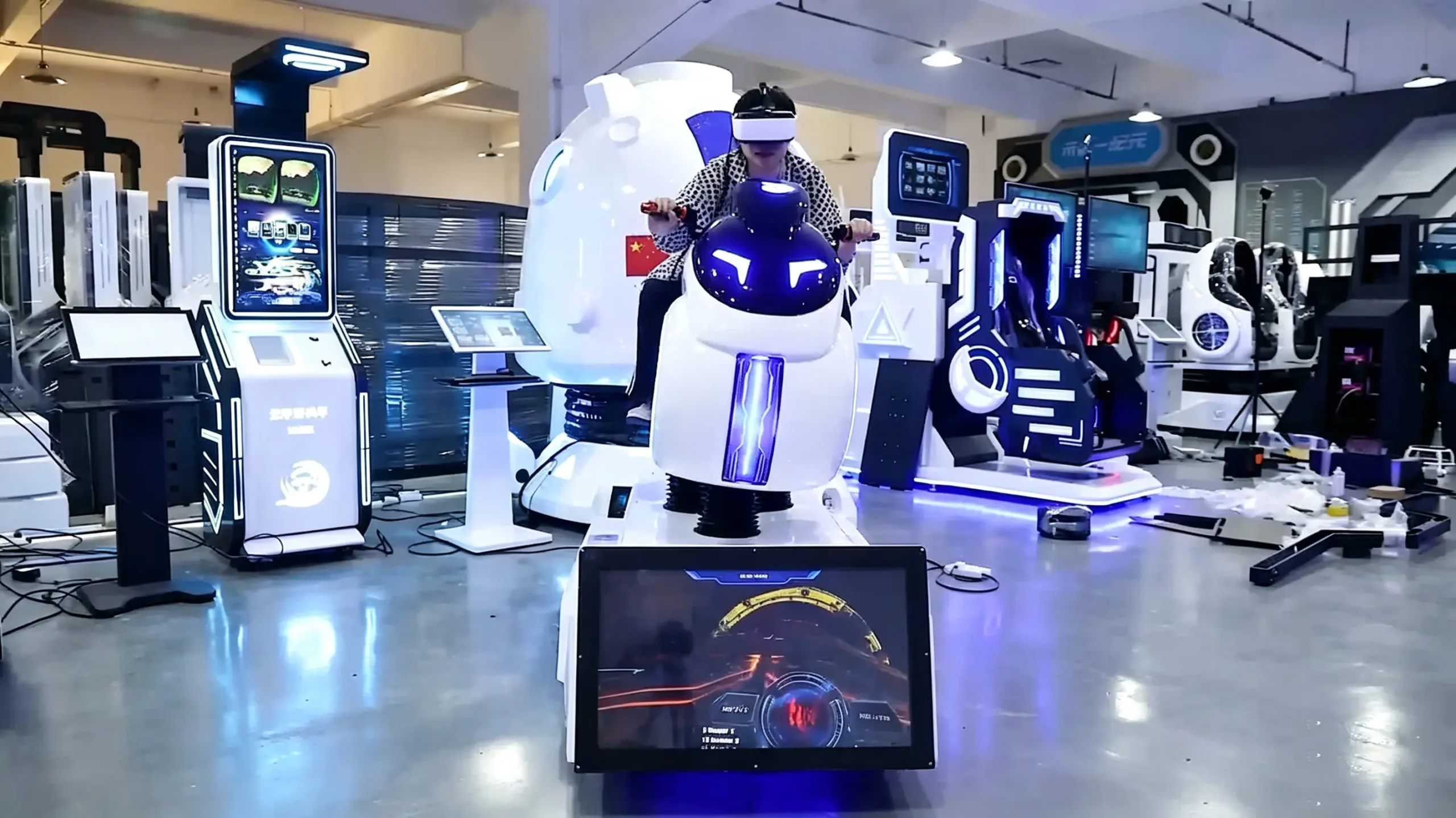
For commercial VR equipment, ask to see the actual production process. Depending on the supplier, this may include cabinet assembly, electrical wiring, hardware installation, machine assembly, testing stations, software installation, finished equipment and packing areas.
For larger orders, a live factory video call can be particularly useful. Ask the supplier to show current assembly or testing activity rather than spending the entire call in the showroom.
A useful factory tour should answer questions such as what is being produced that day, which products are assembled in-house and whether the team can show a machine during assembly rather than only finished display models.
The goal is not simply to judge factory size. It is to establish a visible connection between the company selling the equipment and the process that produces it.
If the supplier works with an external factory, ask for the manufacturer’s identity and clarify how technical communication, quality control and after-sales support are handled.
Testing: How Is the Machine Checked Before Shipment?
Commercial VR equipment combines multiple hardware and software components. Depending on the machine, these may include a computer, VR hardware, display, sensors, controls, electrical components, motion mechanisms and game software.
The useful question is therefore not whether a supplier has quality control. Instead, ask:
What exactly happens to my machine between final assembly and packing?
A professional supplier should be able to explain how the final machine is checked before shipment. This may include hardware operation, electrical connections, displays, VR equipment, controls, motion functions where applicable, software and included game content.
The final unit should be checked against the agreed configuration before it is packed. For production orders, buyers can also request production photographs or video verification where available.
You do not need every supplier to use the same testing procedure. What matters is whether the supplier has a clear and repeatable process and can explain it in practical terms.
A supplier that cannot explain how its machines are tested before shipment deserves additional scrutiny.
Verify What Happens After the Order
Certifications: Match the Documents to the Equipment
Certification requirements depend on the destination country, equipment category and exact configuration.
For buyers importing commercial VR equipment, the important question is not simply whether the supplier has certificates. You need to know which requirements apply to the specific machine you are purchasing and whether the available documentation corresponds to that model and configuration.
For European markets, applicable CE requirements can depend on the equipment and may involve legislation such as the EMC Directive 2014/30/EU and, where applicable, the Low Voltage Directive 2014/35/EU.
Other markets have their own electrical, safety and import requirements.
Before ordering, ask the supplier what compliance documents it can provide and independently confirm what your destination market requires. A certificate for a different model should not automatically be treated as evidence for the machine you are buying.
OEM and Customization: Find Out Who Performs the Work
Commercial VR projects are often customized.
A buyer may need a different cabinet color, company logo, artwork, interface language, voltage configuration, display setup, game package, dimensions or other project-specific changes.
Instead of asking only whether a supplier offers OEM or ODM service, ask two more specific questions:
Which parts of this machine can be customized?
Who performs the customization work?
These questions can have a direct effect on communication and lead time.
When customization is handled by the manufacturer’s own engineering or production team, changes can usually be discussed directly with the people working on the equipment. When the seller relies on another factory, each change may need to pass through an additional company.
OEM or ODM capability also does not mean every component can be modified. Each requested change should be confirmed before production.
Spare Parts and After-Sales Support: Put the Terms in Writing
The purchase does not end when the machine leaves the factory.
Commercial VR equipment will eventually need maintenance, troubleshooting or replacement components. Before placing an order, clarify which spare parts are available, how replacement parts are supplied, what the warranty covers and how technical problems are reported.
For distributors and FEC operators, it is useful to understand which components are considered common replacement parts and how long the supplier expects to support the model.
The most important rule is simple: put important terms in writing.
Warranty coverage, technical support and spare-parts arrangements should not exist only in chat messages. Important commitments should appear in the quotation, contract, warranty document or another formal agreement.
Technical Support: Test the Supplier Before You Commit
A sales conversation tells you what the supplier wants to sell. A technical conversation tells you how well the supplier understands the equipment.
Before choosing a supplier, ask practical questions about installation space, power requirements, setup, routine maintenance, computer failure, display failure and motion-related problems.
The salesperson does not need to answer every technical question personally. What matters is whether the company can involve an engineer or technical specialist when required.
A clear response such as “I will confirm this with our engineer” is often a better sign than a quick but uncertain technical answer.
The purpose is to understand whether the supplier can support the equipment during actual operation, not simply during the sales process.
Manufacturer or Trading Company: What Are You Actually Buying?
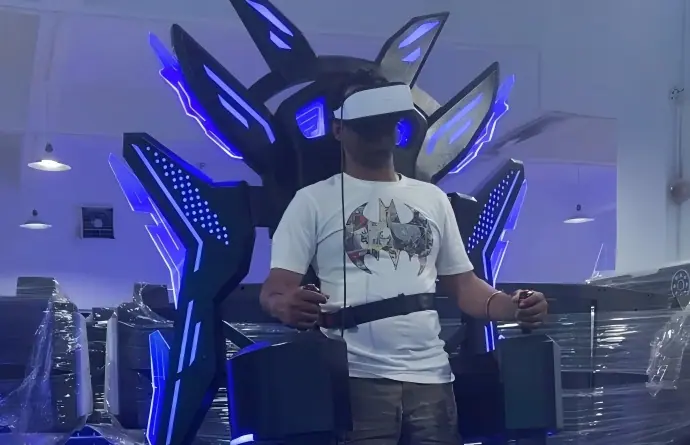
The difference between a manufacturer and a trading company is worth understanding, but it should not be treated as a simple good-versus-bad decision.
| Factor | Manufacturer | Trading Company / Reseller |
|---|---|---|
| Production control | Usually direct | Depends on factory partner |
| Customization | Usually more direct | Depends on original manufacturer |
| Technical communication | Usually direct | May require coordination |
| Spare parts | Usually more direct | Depends on original manufacturer |
| Factory verification | Can verify its own production | Should identify the actual factory |
| Product source | Usually own production | May source from multiple manufacturers |
A trading company can provide real value when a buyer needs equipment from several factories, product integration, logistics coordination or a single point of contact for a larger project.
The key question is therefore not simply whether the supplier calls itself a factory.
Ask:
Who manufactures the equipment I am buying, and who will answer a technical question after the machine has been operating for a year?
A supplier that can answer both questions clearly is easier to evaluate and easier to work with over the long term.
Red Flags That Deserve a Second Look
One warning sign does not automatically mean a supplier is unreliable. Several together should slow down the purchasing process.
Be cautious when the supplier cannot clearly identify the actual manufacturer, refuses to provide current production evidence, gives inconsistent technical answers or avoids giving clear warranty terms.
The same applies when the company named in the contract is different from the company you negotiated with and there is no clear explanation, when certification documents cannot be linked to the quoted equipment, or when the supplier cannot describe its testing process.
A significantly lower quotation also deserves closer examination.
A low price is not necessarily a problem. The important question is why the price is lower.
Differences in computer hardware, VR equipment, displays, motion components, cabinet materials, software, packaging, testing and after-sales support can all change the final quotation.
When the price gap is large, do not ask only whether another supplier can match it.
Ask:
What is different about this configuration?
That question often reveals more than a simple price negotiation.
How to Compare VR Arcade Machine Quotes on Equal Terms
The biggest mistake in supplier comparison is treating different machines as though they were identical.
Before comparing prices, create a consistent specification sheet for every supplier. The comparison should include the complete equipment configuration, rather than just the model name.
| Comparison Area | What to Confirm |
|---|---|
| Equipment configuration | VR hardware, computer, display, player capacity, controls and motion functions |
| Game content | Included games, software package and update policy |
| Shipping | Freight cost, shipping method and estimated landed cost |
| Lead time | Production time and expected shipment date |
| Warranty | Warranty period, covered components and exclusions |
| Spare parts | Common replacement parts, pricing and availability |
| Customization | Branding, color, language, voltage and hardware changes |
| Technical support | Installation guidance, troubleshooting and after-sales contact |
| Project experience | Similar installations and commercial applications |
For buyers who are still comparing equipment prices, our guide to How Much Does a VR Arcade Machine Cost in 2026? provides a more detailed breakdown of commercial VR machine price ranges, configuration differences and the costs that are not included in a basic FOB quotation.
The most useful comparison is not the cheapest unit price. It is the supplier offering the clearest configuration and the most complete commercial package for the project.
Buying VR Arcade Machines from China: Six Steps
Step 1: Define the Project
Start with the venue rather than the machine.
Determine the available floor space, target customers, expected traffic, budget, number of machines and operating model.
Then decide what kind of VR attraction fits the project, such as single-player VR, multiplayer VR, racing, shooting, motion simulation or a larger cinema-style attraction.
Step 2: Shortlist Three to Five Suppliers
Build a shortlist using manufacturer websites, B2B platforms, trade shows, industry referrals and search results.
Avoid building an entire project around a single quotation before completing a basic supplier comparison.
Step 3: Send the Same RFQ to Every Supplier
Give each supplier the same information, including product type, quantity, destination country and port, electrical requirements, certification requirements, customization requirements and expected delivery schedule.
Identical input makes the resulting quotations much easier to compare.
Step 4: Verify Each Supplier
Check the legal company identity, manufacturing capability, testing process, certification documentation, customization arrangements, spare-parts support and technical service.
At this stage, focus less on who offers the lowest price and more on who can provide clear evidence.
Step 5: Lock the Configuration in the Contract
Before making payment, make sure the contract identifies the exact equipment and agreed configuration.
Important details may include hardware, display, motion functions, software, game content, accessories, spare parts, branding and other customization requirements.
A feature that exists only in a sales conversation is much harder to enforce than a feature written into the agreement.
Step 6: Confirm Support Before Shipment
Before the equipment leaves China, confirm the warranty terms, technical support contacts, spare-parts arrangements and process for reporting and resolving faults.
This is also the right stage to confirm installation guidance, documentation and any agreed production inspection.
AMA GAME as a Supplier Example
AMA GAME is the active gaming and interactive entertainment brand of Guangzhou AMA Amusement Equipment Co., Ltd., a commercial amusement equipment manufacturer based in Guangzhou, China.
The company was established in 2009. AMA GAME focuses on active gaming and interactive entertainment equipment, including commercial VR arcade equipment, interactive floor games, sports simulators and other entertainment attractions.
For buyers researching commercial VR equipment, the AMA GAME Virtual Reality Game page presents the company’s current VR equipment range, including VR egg chairs, VR chair attractions, racing simulators, motorcycle simulators, multiplayer VR attractions and other commercial VR equipment.
The important point is not that buyers should automatically choose AMA GAME. The same verification process described throughout this article should be applied to AMA GAME just as it should be applied to any other Chinese supplier.
Before ordering, buyers should confirm the specific machine configuration, production process, testing arrangements, applicable compliance documentation, customization scope, warranty, spare parts and technical support.
That makes the supplier comparison more transparent and keeps the purchasing decision based on evidence rather than marketing claims.
Frequently Asked Questions
How do I choose a VR arcade machine supplier in China?
Start by verifying the supplier’s legal identity, actual manufacturing capability, testing process, applicable certifications, customization options, spare-parts support and after-sales service.
Then ask every shortlisted supplier to quote the same machine configuration so you can make a like-for-like comparison.
How can I tell whether a Chinese VR supplier is really a manufacturer?
Ask for the legal company name, factory address and current production evidence. A live video tour showing assembly or testing is more useful than showroom photographs alone.
If the seller is not the manufacturer, ask which factory actually produces the equipment and who is responsible for technical support after delivery.
Is it better to buy VR arcade machines directly from a Chinese manufacturer?
Buying directly from a manufacturer can make communication about production, customization, technical problems and spare parts more straightforward.
A trading company can also be a useful partner when it provides sourcing, product integration or project coordination. The important question is not the business model itself, but whether you know who manufactures the equipment and who will support it after delivery.
What should I ask a VR arcade machine supplier before ordering?
Ask about the exact equipment configuration, production lead time, testing process, applicable certifications, warranty coverage, spare parts, customization, shipping and technical support.
You should also confirm the legal seller and the actual manufacturer before making a payment.
What certifications do VR arcade machines need?
Requirements depend on the destination market, equipment type and specific configuration.
For European markets, applicable CE requirements may involve legislation such as the EMC Directive and, where applicable, the Low Voltage Directive. Other countries have their own electrical, safety and import requirements.
Always confirm the requirements that apply to the exact model you intend to import.
Can I request a factory video tour before buying?
Yes. For commercial orders, a live factory or production tour can be a useful way to verify that the supplier is connected to an actual manufacturing operation.
Ask to see assembly, wiring or testing activity rather than only completed machines in a showroom.
What should I compare besides the VR machine price?
Compare the complete equipment configuration, shipping cost, lead time, warranty, spare parts, customization and technical support.
The final delivered cost is more useful than the factory price alone because different suppliers may quote different hardware, software and service packages.
For a detailed look at commercial VR machine pricing, read our VR arcade machine cost guide for 2026.
What is the MOQ for VR arcade machines?
MOQ depends on the supplier, product model and project requirements.
Some suppliers may accept single-machine orders, while larger distributor and entertainment projects are normally quoted according to quantity, configuration and customization.
When comparing suppliers, use the same quantity and configuration so the MOQ comparison remains meaningful.
How do I verify a VR arcade machine factory in China?
Start with the company’s legal information and factory address. Then ask for current production evidence and, where possible, request a live video tour.
You should also ask how the equipment is tested before shipment and clarify the relationship between the seller and the factory that manufactures the machine.
What is the difference between a VR arcade machine manufacturer and a trading company?
A manufacturer normally has direct control over production, while a trading company works with one or more manufacturing partners.
A manufacturer may provide more direct communication for engineering and customization, while a trading company may offer sourcing and product integration.
Neither model is automatically better. What matters is transparency about the actual manufacturer, equipment configuration and after-sales responsibility.
How much does it cost to open a VR arcade?
The cost depends on the venue, number and type of machines, rent, renovation, staffing, freight, marketing and working capital.
Equipment is only one part of the total startup investment. A small VR zone added to an existing venue can require a very different budget from a dedicated VR arcade.
For a more detailed breakdown of startup costs, operating expenses, revenue and profit considerations, read How Much Does It Cost to Open a VR Arcade? Startup Cost, Revenue & Profit.
Final Checklist Before You Pay a Deposit
Before making a payment, make sure you can clearly answer the following questions.
| Check | Question |
|---|---|
| Legal seller | Who is named in the contract and who receives payment? |
| Actual manufacturer | Who physically manufactures the equipment? |
| Factory | Where is the machine produced, and can the production process be verified? |
| Testing | How is the machine tested before shipment? |
| Certification | What requirements apply in the destination market, and does the documentation match the model? |
| Configuration | What exactly is included in the quotation? |
| Customization | Which parts can be customized, and who performs the work? |
| Spare parts | Which replacement parts are available and how can they be ordered? |
| Warranty | What does the warranty cover, and what are the exclusions? |
| Technical support | Who handles technical problems after delivery? |
| Total cost | What is the realistic delivered and operating cost of the equipment? |
If several of these questions cannot be answered clearly, continue researching before paying a deposit. A reliable supplier should be able to explain the equipment, production process, commercial terms and after-sales support in a way that can be verified and documented.
A Final Note
The cheapest VR arcade machine is not always the lowest-cost VR project.
A supplier should be evaluated on more than the initial quotation. Company identity, manufacturing capability, equipment configuration, testing, certifications, spare-parts availability and technical support can all affect the real cost of operating commercial VR equipment.
Whether you are evaluating AMA GAME or another VR arcade machine supplier in China, use the same standard. Compare identical configurations, ask specific questions and put important terms in writing.
The goal is not simply to find the lowest quotation. It is to find a supplier whose equipment, production process and after-sales support make sense for your business over the long term.