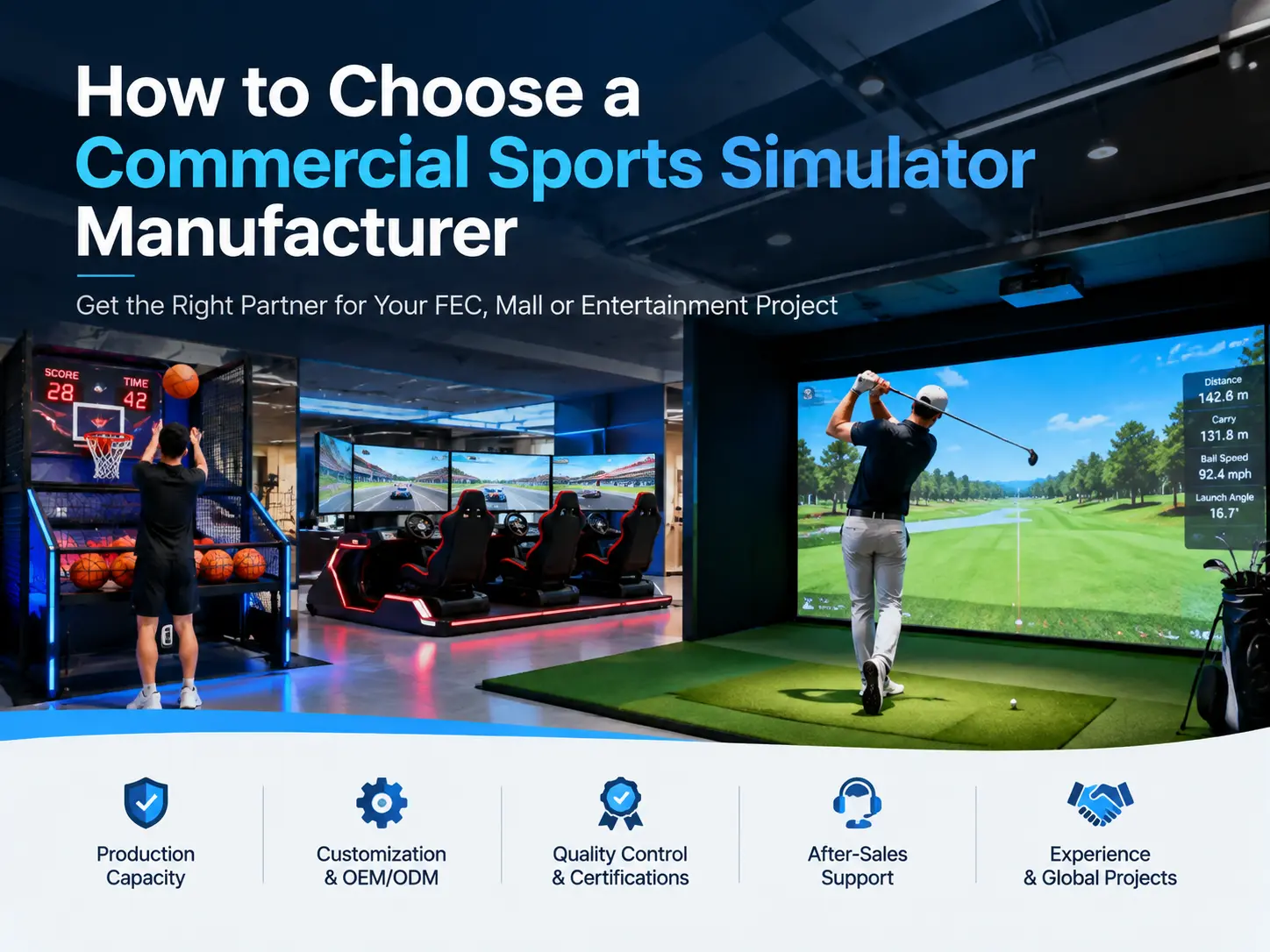

Sports simulation games are becoming one of the most profitable attractions in modern entertainment venues. From shopping malls and arcades to family entertainment centers (FECs) and sports bars, these interactive machines combine physical activity with digital gameplay to deliver immersive experiences that keep players coming back.
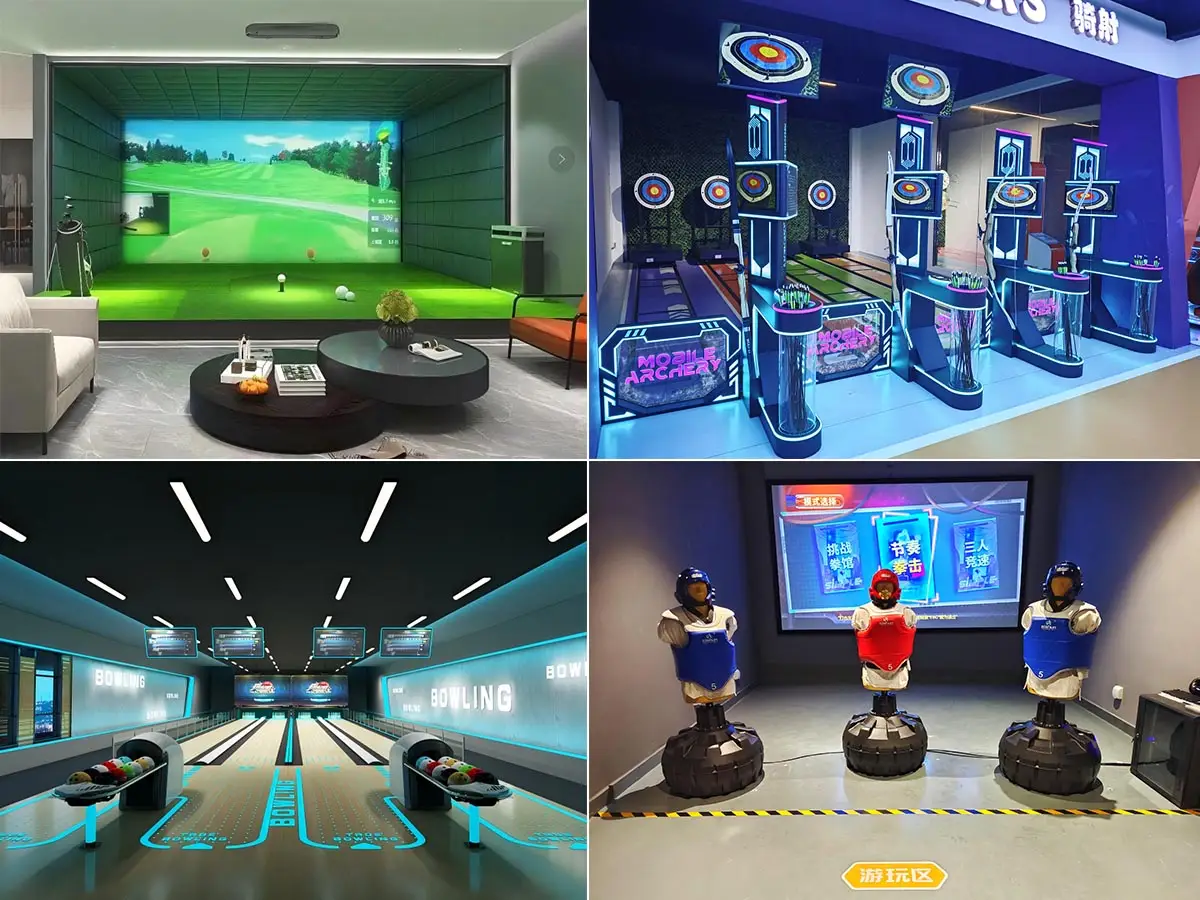
In this 2026 buyer guide, we explore the most popular sports simulation games for commercial venues, including golf simulators, boxing machines, football simulators, and bowling simulators. Based on AMA Amusement’s 16+ years of arcade manufacturing experience, this guide will help operators choose high-ROI attractions that maximize customer engagement and revenue.
Why Sports Simulation Games Are Popular in Commercial Venues
Over the past few years, sports simulators have evolved from simple arcade machines into immersive entertainment systems.
Commercial venues choose sports simulation games because they offer:
• High player engagement through realistic motion tracking
• Strong repeat play rates compared with traditional arcade games
• Compact installation space compared with real sports facilities
• Excellent ROI for arcade operators
For shopping malls and FEC operators, sports simulators provide an experience that cannot easily be replicated at home, which makes them highly attractive entertainment investments.
Top Sports Simulation Games for Commercial Venues in 2026
1. Golf Simulator Machines
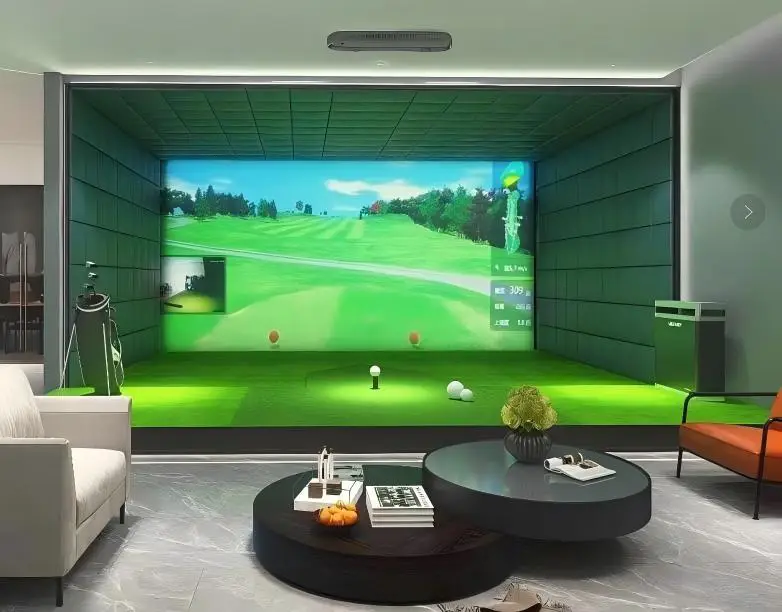
Golf simulators are among the most popular sports simulator machines for commercial venues. Using motion sensors and projection technology, these systems recreate realistic golf courses and swing mechanics.
Key Advantages
• Realistic swing tracking technology
• Multiple virtual golf courses
• Suitable for beginners and experienced players
• Popular in shopping malls and sports lounges
Space Requirement: approx. 3.5m × 4m
Golf simulators are especially attractive for venues looking to provide premium interactive sports experiences.
2. Archery Simulation Game
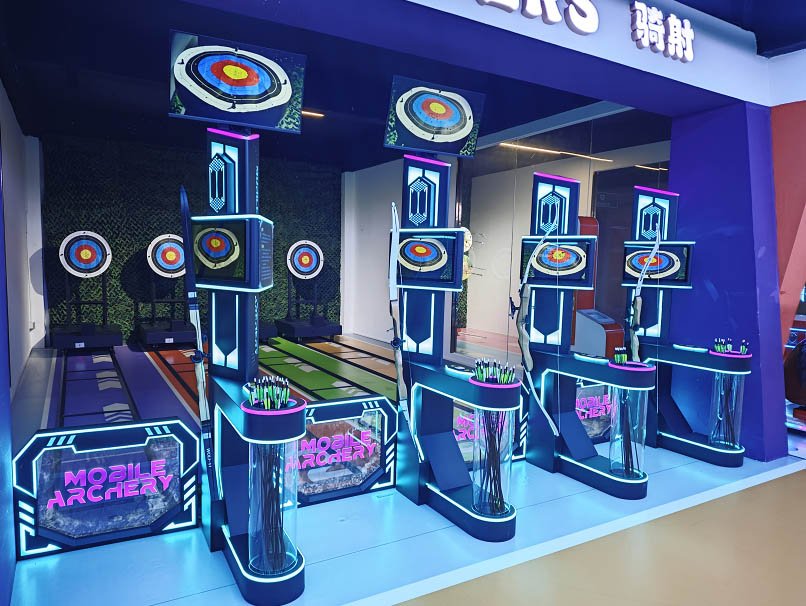
Archery simulators combine traditional archery with projection-based digital targets.
Players use real bows while sensors calculate accuracy and scoring.
Why It Works for Venues
• Unique gameplay experience
• Safe for indoor environments
• Attractive for events and exhibitions
Space Requirement: approx. 2m × 3m
3. Bowling Simulation Games
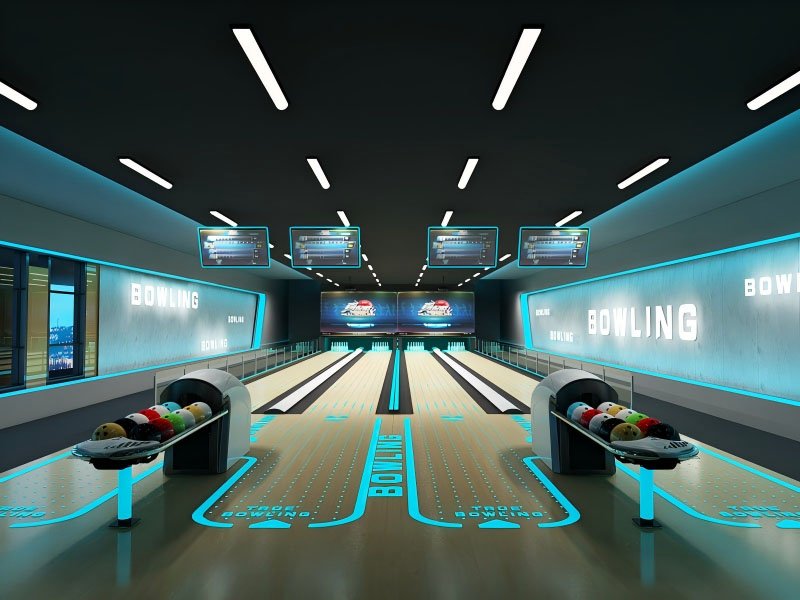
Bowling simulation systems recreate the fun of bowling without requiring a full bowling lane. Players roll a real ball toward a digital target while the system calculates scoring automatically.
Benefits
• Saves significant installation space
• Family-friendly gameplay
• Attractive for group entertainment
• Ideal for FEC venues
Space Requirement: approx. 3m × 3.5m
4. Boxing Machine (Punching Game)

Boxing machines remain one of the most recognizable arcade sports simulator games. Players punch a sensor bag to measure strength and compete for high scores.
Why Operators Love It
• Small footprint
• High replay value
• Simple gameplay that attracts all ages
• Excellent visibility in busy locations
Space Requirement: approx. 1.5m²
Boxing machines are widely installed in shopping malls, arcades, cinemas, and amusement centers.
5. Football (Soccer) Simulator

Football simulators allow players to kick a real ball toward interactive targets or goal projections.
These machines are extremely popular in regions where football is the dominant sport.
Key Features
• Motion tracking sensors
• Competitive scoring system
• Multiplayer challenge modes
• Strong appeal to teenagers and sports fans
Space Requirement: approx. 4m × 5m
Revenue Models & Profitability for Commercial Operators
Sports simulators generate income through multiple channels:
1. Pay-Per-Play (Most Common)
Players pay per round, typically:
Golf: per 18 holes or per swing pack
Archery: per challenge
Bowling: per frame or per game
Boxing: per punch attempt
Football: per accuracy or power challenge
2. Memberships & Hourly Rental
Common in:
Indoor golf lounges
Training academies
Sports bars
3. Tournaments and Competitions
Highly profitable during weekends or holidays.
4. Birthday Parties & Corporate Events
Bowling lanes and golf rooms generate strong off-peak revenue.
5. Multi-Game Bundled Passes
Offering packages increases average customer spend.
To browse systems suitable for different revenue models:
👉 https://ama-game.com/sport-simulator/
Space Planning: Best Machines for Malls vs FECs vs Gyms
Shopping Malls
Best options:
Boxing Simulator
Football Simulator
Archery Simulator
Compact Golf Units
Why: high visibility, fast gameplay, strong impulse-purchase behavior.
Family Entertainment Centers (FECs)
Best options:
Multi-lane Bowling Simulator
Golf Simulator
Football Simulator
Why: longer dwell time and high repeat play.
Sports Gyms / Training Centers
Best options:
Golf simulator
Football simulator
Archery simulator
Why: strong skill development component.
Sports Simulation Game Trends for Entertainment Venues
Several trends are shaping the future of sports simulation arcade machines.
Immersive Motion Tracking
Modern simulators use sensors to detect player movement and deliver more realistic gameplay experiences.
Social and Competitive Gameplay
Multiplayer challenges and tournament modes increase player engagement and encourage repeat play.
Hybrid Physical + Digital Experiences
Combining real sports equipment with digital scoring systems creates a unique entertainment experience that cannot be replicated on mobile devices or consoles.
How to Choose the Right Sports Simulator for Your Venue
When selecting a commercial sports simulator, venue operators should consider the following factors.
1. Available Space
Small arcades may prefer compact machines like boxing simulators, while larger venues can install golf or football simulators.
2. Target Audience
• Family audiences → Bowling simulators
• Teenagers → Boxing or football simulators
• Corporate or premium venues → Golf simulators
3. Revenue Potential
Machines with simple gameplay and strong visual appeal usually generate higher play frequency.
OEM/ODM Advantages for Commercial Buyers
As a manufacturer with 16+ years of production experience, AMA Amusement provides extensive customization:
Supported Services
Custom cabinets and colors
Personalized branding and decals
Localized language interfaces
Region-specific payment systems
Software branding and UI customization
Tailored system sizes for small venues
Why OEM Matters for Commercial Operators
Stronger brand identity
Better integration with themed venues
Higher customer loyalty and repeat play
Differentiation from local competitors
Conclusion
Sports simulation games are becoming essential attractions for modern entertainment venues. From golf simulators and boxing machines to football and bowling simulators, these interactive systems offer strong player engagement and reliable revenue potential.
For venue operators looking to expand their attraction lineup, investing in high-quality sports simulator machines can significantly enhance customer experience and profitability.