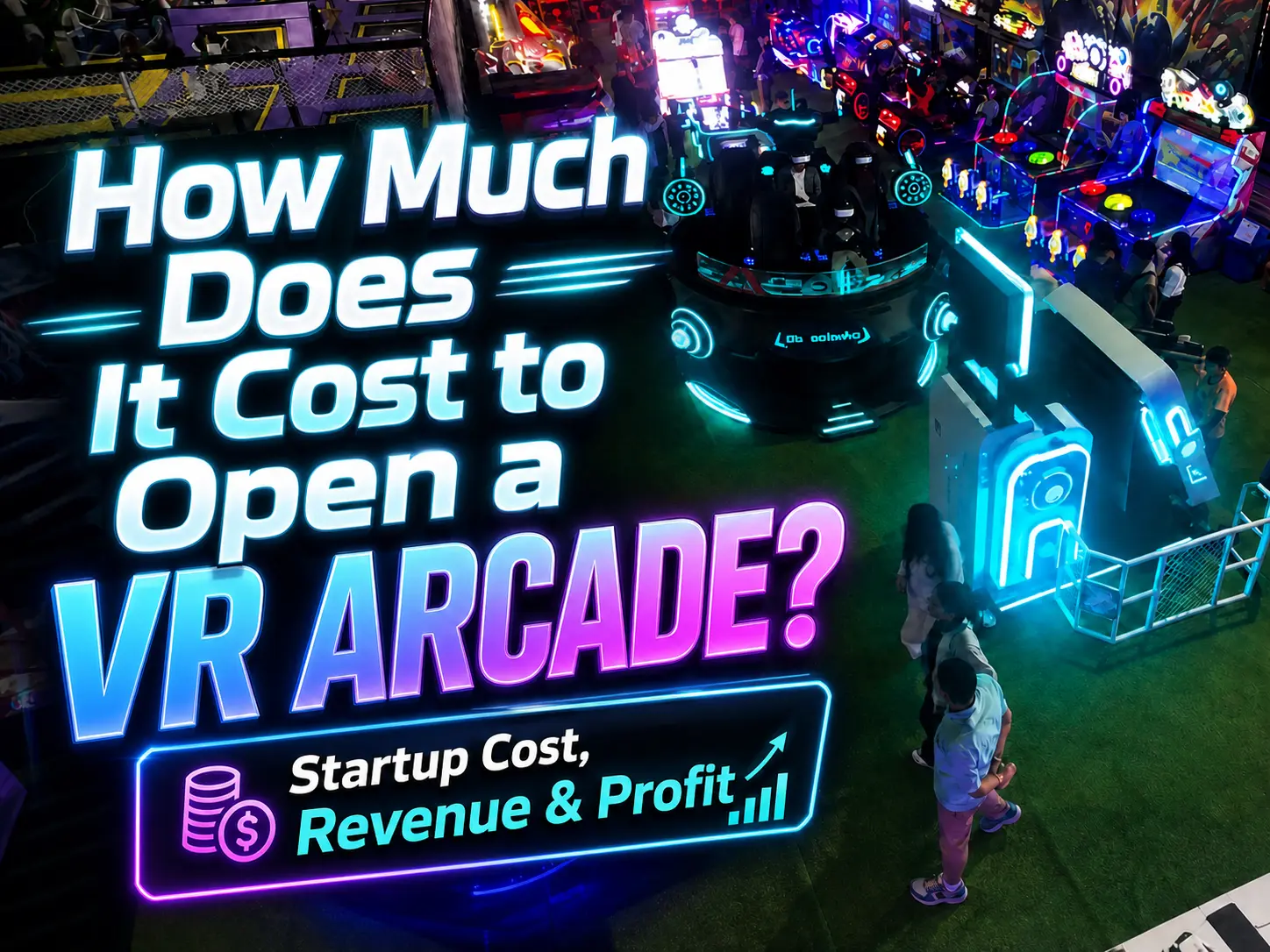
Buying a commercial VR arcade machine can cost anywhere from around US$2,500 to US$30,000+ per unit, depending on the type of machine, number of players, motion platform, screens, software, and overall size.
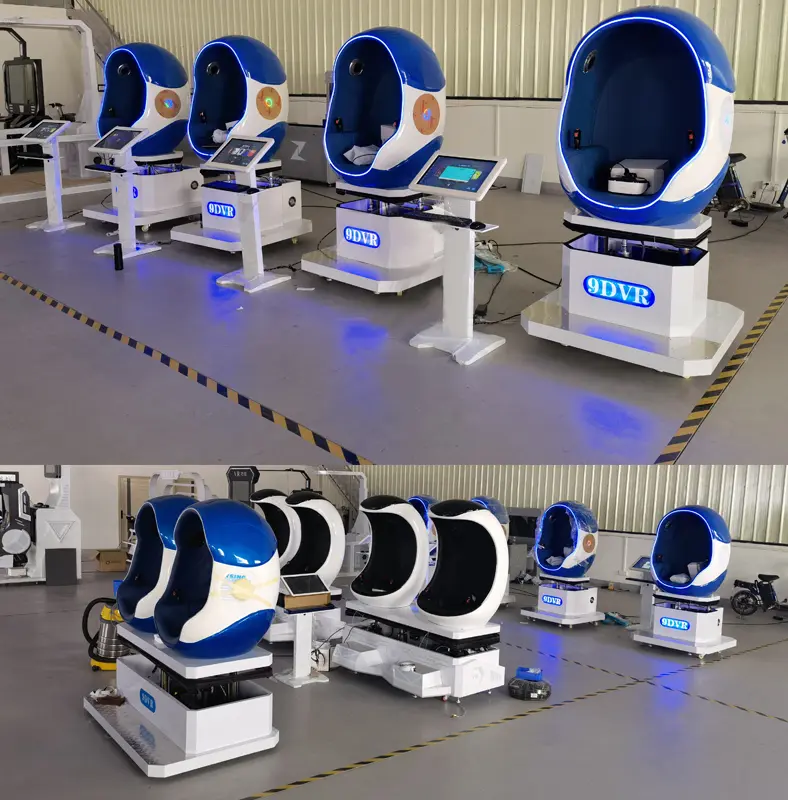
Smaller machines such as 9D VR egg chairs and single-seat racing simulators are generally at the lower end of the price range. Larger multiplayer attractions, motion simulators, and cinema-style VR equipment require a higher investment.
For buyers planning a complete VR entertainment area, the machine price is only one part of the budget. Freight, import duties, electrical preparation, installation, and spare parts should also be considered.
This guide uses price ranges from AMA GAME’s current VR export product range. The figures below are intended to help buyers understand the typical budget for different types of commercial VR equipment.
Important: Prices are quoted as FOB Guangzhou reference ranges and may change depending on configuration, materials, exchange rates, and customization requirements. Always request a written quotation before placing an order.
VR Arcade Machine Price List in 2026
The following table shows typical price ranges for different types of commercial VR arcade equipment.
| Machine Type | Typical Configuration | Reference Price (FOB Guangzhou) |
|---|---|---|
| 9D VR Egg Chair | 1–2 seats, motion platform, VR games | $3,000–$4,500 |
| 9D VR Racing Simulator | Single seat, motion, 1 screen | $2,500–$3,850 |
| 9D VR Racing Simulator – 3-Screen 6-DoF | 1 seat, 6-DoF motion, 3 screens | $6,450–$7,800 |
| VR Motorcycle Simulator | 1 seat, motion platform, racing content | $3,500–$4,000 |
| VR Chair 360 | 1 seat, 360° rotation | Factory quotation |
| 3-Player 9D VR Chair | 3 synchronized seats | Factory quotation |
| 9D VR Horse Riding Machine | 1 seat, motion and shooting gameplay | $4,000–$5,300 |
| VR Dance Machine | 2-player interactive gameplay | $4,000–$7,000 |
| VR Shooting Simulator | 1–2 players, interactive shooting | $7,500–$8,000 |
| 4-Player VR Shooting Game | Multiplayer interactive gameplay | $9,999–$10,500 |
| VR Interstellar Shuttle | 2 seats, enclosed entertainment cabin | $6,000–$7,000 |
| 9D VR Cinema – Weightless Space | Multi-player cinema attraction | $25,000–$26,500 |
| 5D Theater / Bermuda Adventure Cinema | 270° panoramic experience, 6+ seats | $28,500–$29,600 |
The final price of a machine depends on its configuration. Two machines in the same product category can have very different prices if they use different motion platforms, screens, materials, or software.
VR Arcade Machine Prices by Budget
For project planning, commercial VR machines can be divided into three general investment levels.
| Budget Level | Typical Machines | Budget per Unit | Suitable For |
|---|---|---|---|
| Entry Level | VR egg chairs, racing simulators, motorcycle simulators | $2,500–$4,500 | Small arcades, mall locations, first VR projects |
| Mid-Range | Horse riding, dance machines, multiplayer games, premium racing simulators | $4,000–$10,500 | FECs, dedicated VR areas, entertainment centers |
| Large Attractions | Cinema equipment, enclosed VR cabins, 5D theaters | $24,000–$30,000+ | Large entertainment projects and anchor attractions |
For many new operators, starting with several smaller machines is easier than investing immediately in a large cinema attraction.
A combination of different experiences can also make a VR area more attractive to different customer groups.
Why Do VR Arcade Machines Have Such Different Prices?
A small single-seat simulator and a large multi-player motion attraction may both be called VR machines, but their equipment, technology, and operating requirements are completely different.
When comparing prices, these are the main factors to look at.
1. Number of Players
A single-seat machine is usually less expensive than a multiplayer attraction.
However, multiplayer equipment can serve several customers during the same game session, which may be useful for family entertainment centers, group activities, and party venues.
Before comparing prices, check how many players the machine can accommodate at the same time.
2. Motion Platform and Degrees of Freedom
Motion is one of the biggest factors affecting the cost of a VR simulator.
A basic machine may use a simple motion seat, while more advanced equipment can use a 2-DoF, 3-DoF, or 6-DoF motion platform.
For example, a basic single-screen racing simulator may cost around $2,500–$3,850, while a version with 6-DoF motion and three screens can cost around $6,450–$7,800.
The difference is not only the appearance of the machine. The mechanical structure, motors, control system, and display setup are also different.
3. Screens and Visual Setup
Display configuration has a direct impact on the price.
A commercial VR machine may use a single screen, multiple screens, VR headsets, panoramic displays, or cinema-style projection systems.
Larger visual systems generally require more equipment and a larger installation area.
4. Cabinet Size and Materials
Commercial VR machines are built in different sizes and structures.
Some machines use compact fiberglass cabinets, while larger attractions may use reinforced metal frames or enclosed cabins.
The material affects manufacturing cost, shipping volume, durability, installation requirements, and long-term maintenance.
For high-traffic commercial locations, durability is often just as important as the initial purchase price.
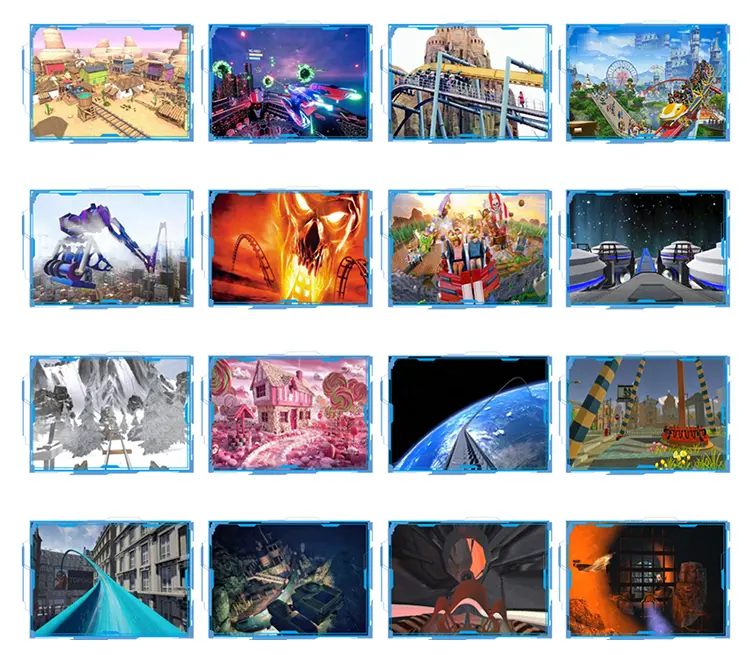
5. Games and Software
The included game library should always be checked before purchasing.
Ask the supplier how many games are included, whether future updates are available, whether there is an additional charge for new content, whether the interface can support different languages, and whether custom branding is available.
Two machines with similar hardware can offer different value depending on the software and content included.
6. Commercial Quality and Components
Commercial entertainment equipment is expected to operate for long hours and handle frequent use.
When comparing suppliers, look beyond the cabinet design and check the components used inside the machine, including motion motors, power supplies, sensors, controllers, screens, and electrical connections.
It is also worth asking about factory testing before shipment and the availability of replacement parts.
VR Egg Chair or 5D Cinema: Which Should You Buy First?
The right choice depends mainly on your available space, budget, and expected customer traffic.
For a new VR entertainment project, many operators prefer to begin with smaller machines and expand later.
Starting with VR Egg Chairs and Racing Simulators
A group of 2–4 VR egg chairs or racing simulators can be a practical starting point.
Typical machine prices are around $3,000–$4,500 per unit, depending on the configuration.
These machines are suitable for shopping malls, arcades, family entertainment centers, cinema entertainment areas, and small VR zones.
Short game sessions also allow more customers to play throughout the day.
Adding Multiplayer VR Equipment
Once customer traffic and demand are established, multiplayer equipment can be added.
A multiplayer VR shooting attraction or group experience can help attract friends, families, birthday parties, corporate groups, and small competitions.
Depending on the equipment, the investment may range from around $8,000 to $10,500.
Using a Large VR Attraction as the Main Feature
A 5D theater or large VR cinema attraction requires a larger investment and more space.
These machines are generally better suited to larger entertainment projects where the attraction can become one of the main features of the venue.
Typical equipment prices can range from approximately $24,000 to $30,000+, depending on the configuration.
A Small VR Zone Example
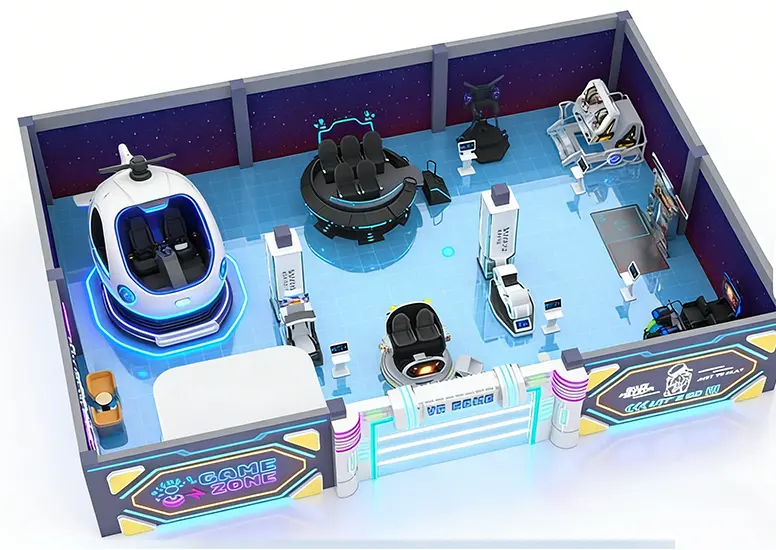
A simple starting combination could include:
2 × VR Egg Chairs
1 × VR Racing Simulator
The equipment investment may be around:
$10,000–$13,000 FOB Guangzhou
This can provide several different experiences without requiring a large cinema-style installation.
The final project budget will depend on shipping, venue preparation, and local installation costs.
What Is Not Included in the FOB Machine Price?
The FOB machine price is only one part of the total investment.
Buyers should also plan for the following costs.
1. International Shipping
VR arcade machines are often large and bulky.
Shipping costs depend on machine dimensions, total shipment volume, destination country, and LCL or full-container shipping.
Shipping several machines together can sometimes reduce the average freight cost per unit.
2. Import Duties and Local Taxes
Import costs vary significantly by country.
Before placing an order, check the applicable import duty, customs requirements, VAT or sales tax, and product classification.
Your local customs broker can usually provide the most accurate information for your destination.
3. Installation and Venue Preparation
Most commercial VR machines are delivered assembled or partially assembled.
However, the venue may still need preparation for electrical connections, power requirements, equipment positioning, floor space, and internet connections where required.
Large attractions may also require additional handling or installation support.
4. Spare Parts
It is a good idea to order basic spare parts with the first shipment.
Depending on the machine, this may include sensors, power supplies, controllers, buttons, joysticks, and other frequently used components.
Having basic spare parts available can reduce downtime if a component needs to be replaced.
5. Payment and Currency Costs
International projects may also involve bank transfer fees, currency exchange costs, and changes in exchange rates.
These costs are usually small compared with the equipment price, but they should still be included in the overall budget.
How Much Should You Budget for a Complete VR Project?
As a general planning estimate, many overseas buyers add approximately 25%–35% to the equipment price to cover costs such as freight, installation preparation, and other project expenses.
For example:
Machine price × 1.25–1.35 = rough project budget estimate
This is only a planning method, not a fixed rule.
Actual costs can be significantly different depending on the destination country, shipping method, taxes, and venue requirements.
ROI Example: A 9D VR Egg Chair
The following example is for illustration only.
Actual results depend on the location, customer traffic, operating hours, ticket price, and local expenses.
| Item | Example Assumption | Estimated Value |
|---|---|---|
| Machine Price | Mid-range 9D VR Egg Chair | ~$3,250 |
| Freight and Other Costs | Example overseas shipment | ~$1,250 |
| Estimated Initial Investment | ~$4,500 | |
| Price Per Play | Example mall pricing | $4–$6 |
| Sessions Per Day | Example range | 20–35 |
| Daily Revenue | Based on $5 average | $100–$175 |
| Monthly Gross Revenue | 28 operating days | $2,800–$4,900 |
These figures should not be treated as guaranteed revenue.
A machine in a busy shopping mall may perform very differently from the same machine in a smaller entertainment venue with limited traffic.
Before purchasing, it is better to estimate revenue using your own daily visitor numbers, expected conversion rate, local ticket price, operating hours, and staff and rent costs.
Why Buying From a Manufacturer Can Make Project Planning Easier
Working directly with the manufacturer can make it easier to confirm the technical details of the equipment before production.
For commercial VR projects, buyers often need more than a standard product.
Common requirements include custom cabinet colors, logo and branding, different language interfaces, customized software, payment system integration, and venue-specific configurations.
Another important consideration is spare parts and technical support.
When purchasing commercial equipment, buyers should confirm how replacement parts are supplied and what support is available after delivery.
The most important thing is to compare suppliers based on the same machine configuration rather than comparing prices alone.
A lower quotation may reflect a different motion platform, screen configuration, software package, or component specification.
How to Get an Accurate VR Arcade Machine Quote
To receive a more useful quotation, prepare the following information before contacting a supplier.
1. Your Location
Your country affects shipping, electrical requirements, and import costs.
2. Available Space
Provide the approximate size of your available area in square meters.
This helps determine which machines can fit comfortably in the venue.
3. Your Target Customers
For example:
Children and families
Teenagers
Shopping mall visitors
Arcade customers
Corporate groups
Different customer groups may require different types of VR attractions.
4. Your Budget
Providing an approximate equipment budget helps the manufacturer recommend suitable options.
5. Your Business Model
Common operating models include pay per play, token or card system, timed packages, membership, and party and group bookings.
With this information, it is easier to compare machine options and build a VR equipment package that fits the project.
Get a VR Arcade Machine Quote From AMA GAME
AMA GAME manufactures commercial VR arcade equipment for entertainment venues and projects.
If you are planning a VR arcade, family entertainment center, mall entertainment area, or dedicated VR attraction, you can contact the AMA GAME team with your country, available space, and project requirements.
A quotation can then be prepared based on the machines and configuration that best fit your project.