Choosing commercial sports simulation equipment starts with the venue, not the product catalog. The right simulator depends on available space, target users, gameplay style, expected traffic, and whether the equipment is intended for entertainment, training, or both.
A compact boxing simulator may be a better fit for a shopping mall than a large golf installation. A sports academy may have very different requirements, with greater importance placed on sport-specific practice and performance feedback.
For venue operators, the goal is to find equipment that fits the way the space will actually be used.
Which Sports Simulator Is Best for Different Venues?
The most suitable sports simulator depends on the venue’s audience, available space, and operating model.
| Venue Type | Suitable Sports Simulation Equipment | Main Consideration |
|---|---|---|
| Family Entertainment Center | Bowling, Basketball, Football, Boxing, Golf | Easy gameplay and broad audience appeal |
| Arcade or Shopping Mall | Boxing, Basketball, Football, Archery | Compact installation and quick gameplay |
| Sports Bar or Lounge | Golf, Bowling, Multi-sport Entertainment | Group play and longer sessions |
| Gym or Fitness Center | Boxing and Active Sports Simulation | Physical activity and repeat use |
| Sports Academy or Club | Baseball, Golf, Tennis, Football | Training and sport-specific practice |
| Hotel or Resort | Golf, Bowling, Boxing, Basketball | Easy guest participation |
| Event or Exhibition | Boxing, Football, Basketball, Archery | Quick interaction and strong visual appeal |
These recommendations are not fixed. A venue can combine several sports simulators when it wants to offer different experiences or serve different customer groups.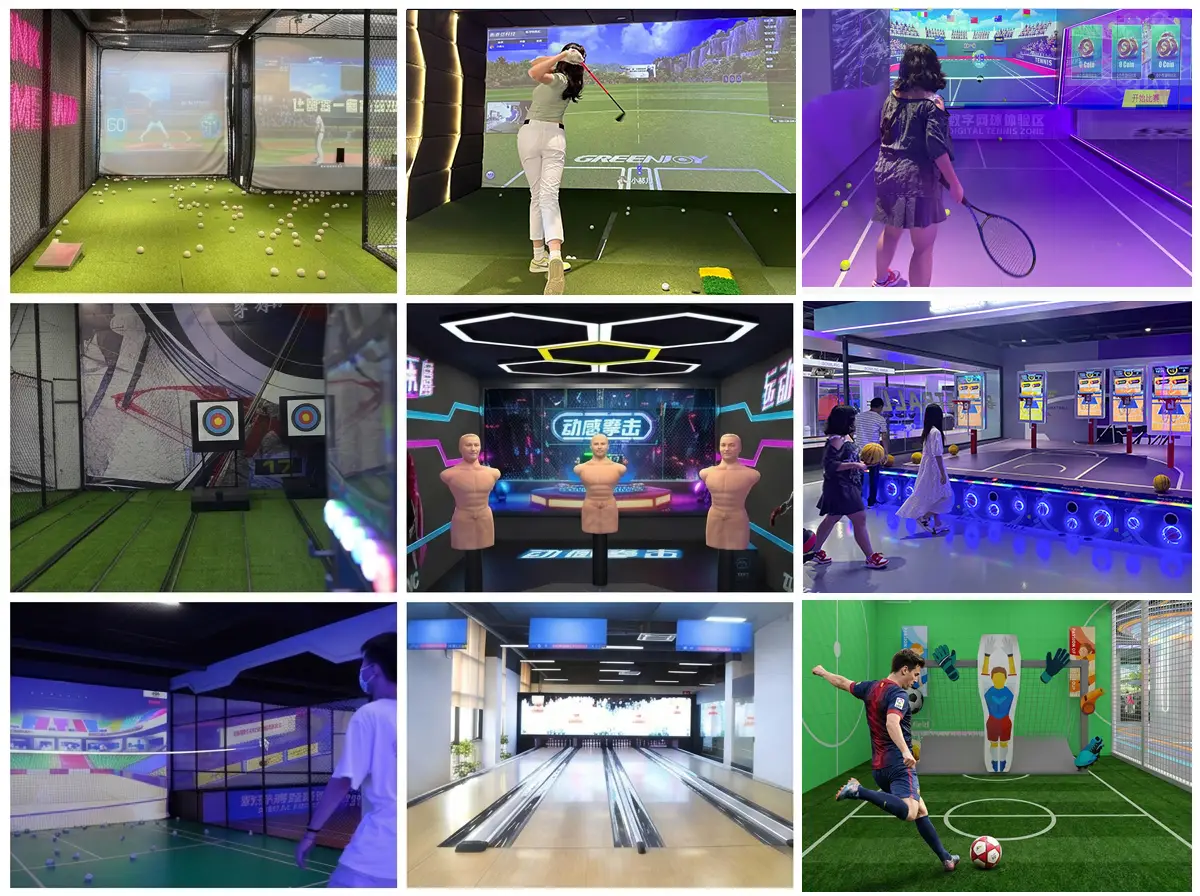
How Do You Choose a Commercial Sports Simulator?
Start by identifying what the equipment needs to do in the venue.
An entertainment venue may need simple controls, short gameplay, competitive scoring, and high player turnover. A sports academy may place more value on tracking, feedback, and repeated practice. A hotel may prefer a product that guests can understand without staff assistance.
The right choice should therefore consider the venue type, customer profile, available space, player capacity, gameplay, installation requirements, and expected usage.
How Much Space Does a Commercial Sports Simulator Need?
The required space depends on the sport and the equipment configuration.
The published dimensions of a machine do not always represent the total area required for installation. Players also need room to move safely, while the venue may need additional space for spectators, queues, equipment access, and maintenance.
Sports such as golf and baseball normally require more room because players need a larger movement and ball-flight area. Compact attractions such as boxing simulation can fit into smaller commercial spaces.
AMA GAME currently lists approximately 4 × 4 × 3 meters for its Boxing Simulator, 6 × 5 × 3 meters for its Golf Simulator, and 10 × 4.5 × 3 meters for its Baseball Simulator. Actual installation requirements can vary according to product configuration and site conditions.
For a new project, it is better to confirm the full installation area with the manufacturer before finalizing the venue layout.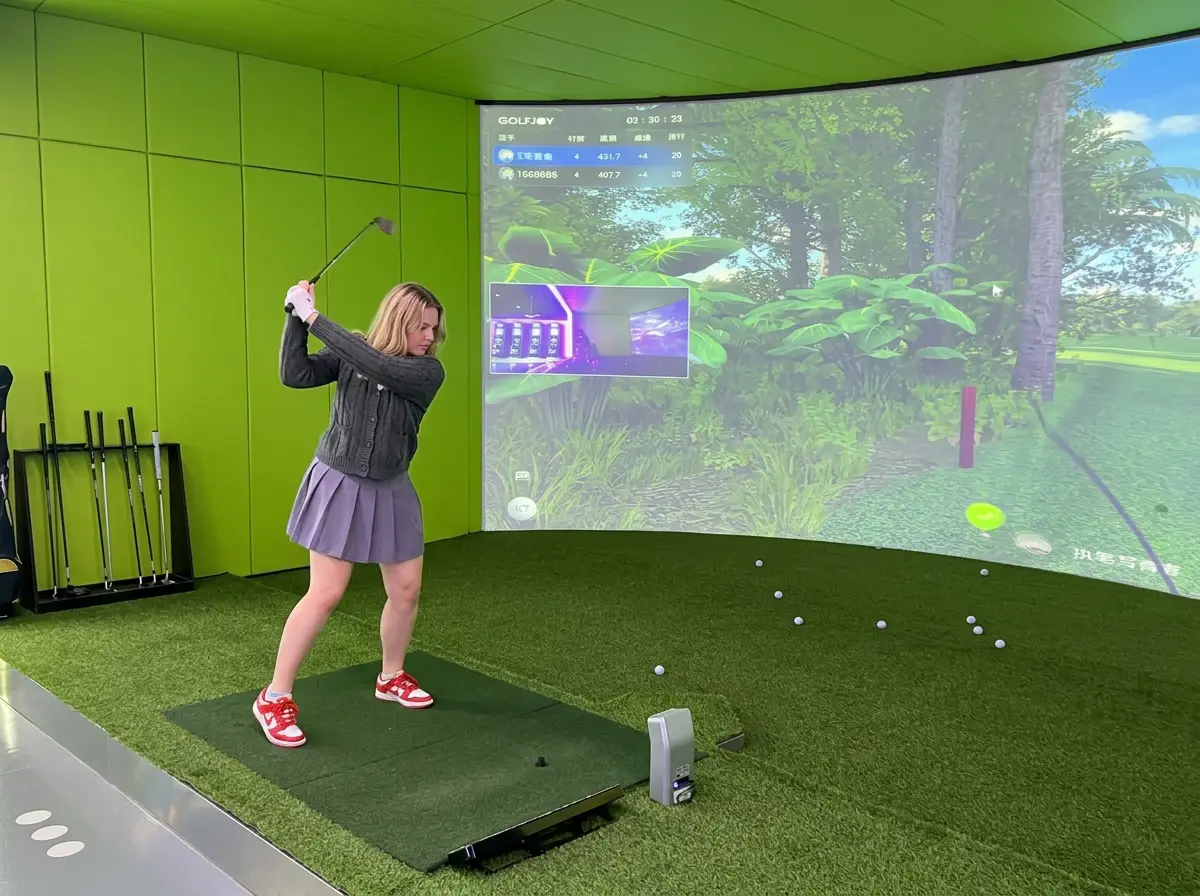
Which Sports Simulator Is Best for a Small Venue?
Compact equipment is generally easier to install in locations with limited floor space.
Boxing simulation and other compact interactive sports attractions can be considered for arcades, malls, hotels, cinemas, retail areas, and smaller entertainment spaces.
However, equipment footprint should not be the only consideration. The layout should also provide enough room for players to move safely and allow customers to approach and leave the attraction comfortably.
Which Sports Simulator Is Best for a Family Entertainment Center?
For an FEC, sports simulators should usually be easy to understand and suitable for a wide range of players.
Bowling, basketball, football, boxing, and golf can all be considered. The choice depends on the available space, customer age range, expected traffic, and whether the venue wants quick competitive games or longer experiences.
An FEC may also combine sports simulation with arcade games, VR attractions, active gaming, and redemption equipment to create a more varied entertainment area.
Which Sports Simulator Is Best for a Shopping Mall or Arcade?
Shopping malls and arcades often need attractions that can catch attention quickly and work efficiently in limited space.
Boxing, basketball, football, and archery can be suitable because the basic interaction is relatively easy to understand. For these locations, visual presentation, gameplay time, player turnover, and ease of operation are important factors.
The equipment should also fit naturally into the surrounding customer flow rather than creating a layout that is difficult to access.
Which Sports Simulator Is Best for a Sports Club?
Sports clubs usually have more sport-focused requirements than general entertainment venues.
Golf, baseball, tennis, and football simulation can be considered depending on the club’s activities. Buyers may place greater importance on realistic interaction, sport-specific functions, tracking, and performance feedback.
The first question should be whether the equipment will mainly be used for training, member recreation, or both.
Which Sports Simulator Is Best for a Gym or Fitness Center?
A gym can use sports simulation to add a more interactive form of physical activity.
Boxing simulation is one practical example because players need to move and react while completing game-based challenges. Other active sports simulation products can also be considered when they fit the available space and customer profile.
For fitness environments, equipment durability, ease of cleaning, maintenance, and regular commercial use are particularly important.
Which Sports Simulator Is Best for a Sports Academy?
For a sports academy, the simulator should support the sport and training goals of the facility.
Baseball, golf, football, and tennis are potential options depending on the type of training provided. A buyer should look at what the equipment measures, what type of feedback it provides, and whether the gameplay supports repeated practice.
AMA GAME currently positions its Baseball Simulator for applications including sports academies, indoor stadiums, and amusement centers.
A training project should therefore be evaluated differently from an entertainment-only installation.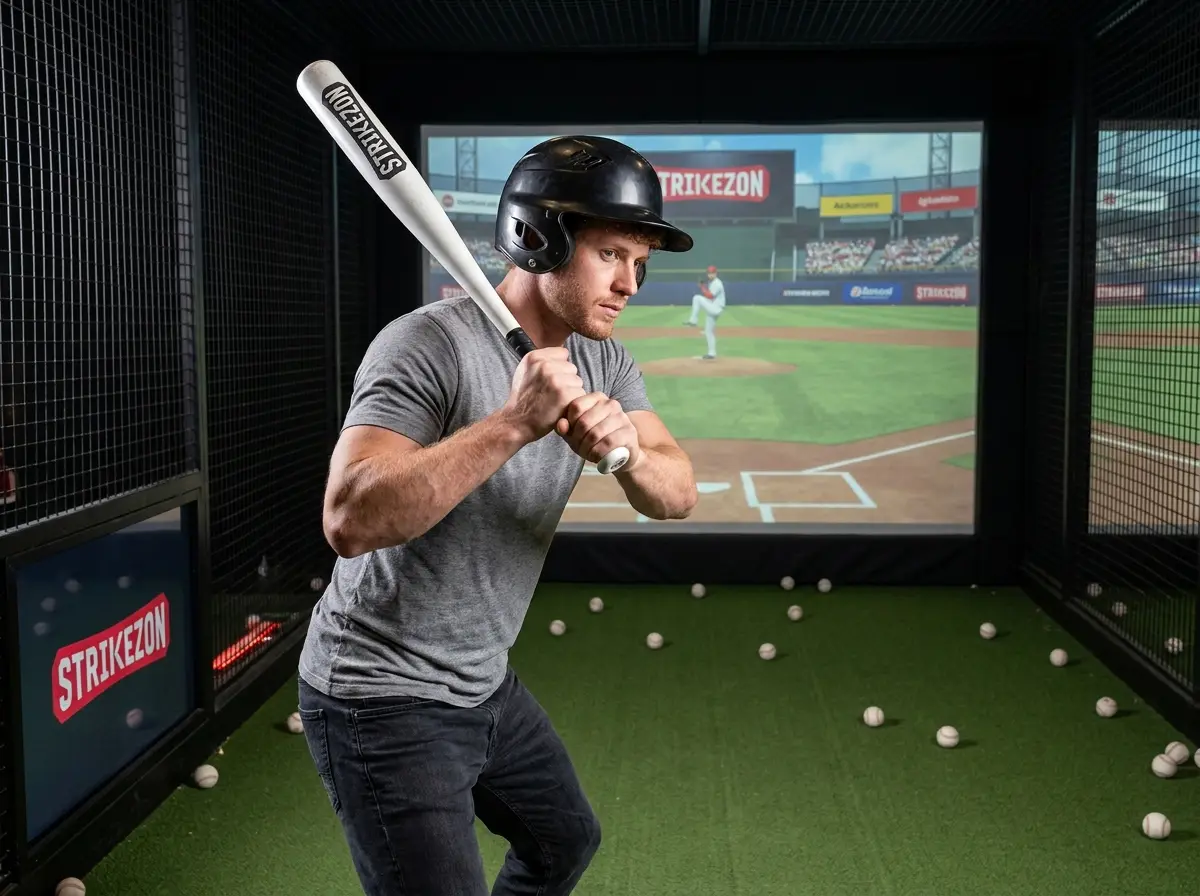
Which Sports Simulator Is Best for a Hotel or Resort?
Hotels and resorts usually need attractions that guests can understand quickly, even when they have no previous experience with simulation equipment.
Golf, bowling, boxing, basketball, and other interactive sports experiences can be considered depending on the available space and guest profile.
A smaller hotel may prefer compact equipment, while a resort with a larger recreation area may have room for a more immersive installation.
Which Sports Simulator Is Best for Events and Exhibitions?
For an event or exhibition, a sports simulator should be easy to demonstrate and quick for visitors to try.
Boxing, football, basketball, and archery can be useful options because the basic interaction can usually be explained in a short time.
Temporary projects also require practical planning around transportation, setup, power supply, branding, and installation time.
Should a Sports Simulator Be Used for Entertainment or Training?
The intended use should be decided before choosing the product.
Entertainment-focused equipment normally emphasizes simple gameplay, scoring, competition, and replay value. Training-oriented equipment may place greater emphasis on tracking, measurement, feedback, and sport-specific practice.
Some venues need both. A sports club, for example, may use a simulator for member entertainment while also offering regular practice sessions.
The same sports category can therefore require different equipment depending on the project objective.
Which Factors Affect the Player Throughput of a Sports Simulator?
Player throughput is influenced by gameplay duration, player capacity, equipment operation, and how quickly one session can transition to the next.
Compact sports attractions with simple gameplay can work well in locations where many visitors need to experience the equipment during a busy period. Larger simulators may be more appropriate when the business model is based on longer sessions or group bookings.
The important point is to match gameplay duration with the venue’s revenue model.
A pay-per-play arcade has different requirements from a sports lounge that charges by the hour.
What Makes a Sports Simulator Suitable for Commercial Use?
Commercial equipment needs to handle repeated public use.
Buyers should look at construction quality, impact resistance, sensor protection, maintenance access, replacement parts, software support, and technical service.
A simulator may look attractive during a demonstration but still be unsuitable for a high-traffic venue if maintenance is difficult or important wear parts are not readily available.
Commercial suitability is therefore about long-term operation, not only initial performance.
What Installation Requirements Should Buyers Check?
Installation requirements vary by sports simulator.
Before purchasing, buyers should confirm the equipment footprint, required playing area, ceiling height, power requirements, network requirements, flooring conditions, wall requirements, and maintenance access.
For international projects, local voltage standards, certifications, shipping requirements, installation support, and after-sales service should also be discussed in advance.
The manufacturer should confirm the final installation requirements based on the actual venue rather than relying only on standard catalog dimensions.
Can Commercial Sports Simulators Be Customized?
Many commercial sports simulators can be customized depending on the product and project.
Common customization requirements include branding, cabinet appearance, colors, interface language, software configuration, payment integration, and equipment dimensions.
AMA GAME provides OEM and ODM support for commercial sports simulation projects. This can be particularly useful for distributors, branded entertainment venues, and projects with multiple locations.
What Should International Buyers Ask a Sports Simulator Manufacturer?
Before requesting a quotation, provide enough information for the manufacturer to understand the project.
The venue type, available floor area, ceiling height, target users, expected customer traffic, preferred sports, intended use, and installation country are useful starting points.
For larger projects, buyers should also explain whether the equipment will be operated through pay-per-play, hourly booking, membership, training, or another business model.
Local voltage requirements, certification requirements, branding needs, payment methods, installation conditions, and after-sales expectations should also be discussed before production.
What Should Be Included in a Sports Simulator Quotation?
A commercial quotation should cover more than the equipment itself.
Buyers should confirm what is included in the simulator, display equipment, software, sensors, accessories, spare parts, installation support, packaging, and warranty.
It is also useful to clarify whether shipping, on-site installation, remote commissioning, software updates, and technical support are included or quoted separately.
Comparing quotations on the complete configuration makes it easier to understand the actual project cost.
Choosing the Right Commercial Sports Simulator
The best way to select sports simulation equipment is to start with the project rather than the machine.
A shopping mall may need a compact attraction that is visible and easy to understand. A sports academy may need stronger training functions. A hotel may want an accessible activity for casual guests, while a sports club may require a more specialized experience.
The right equipment should fit the available space, target audience, operating model, and long-term use.
AMA GAME provides commercial sports simulation equipment for entertainment, sports, fitness, training, education, hospitality, and event applications. Its range includes golf, baseball, tennis, archery, boxing, bowling, badminton, and other interactive sports equipment.
For a project recommendation, the most useful starting information is the venue type, available space, target users, preferred sports, and intended use.