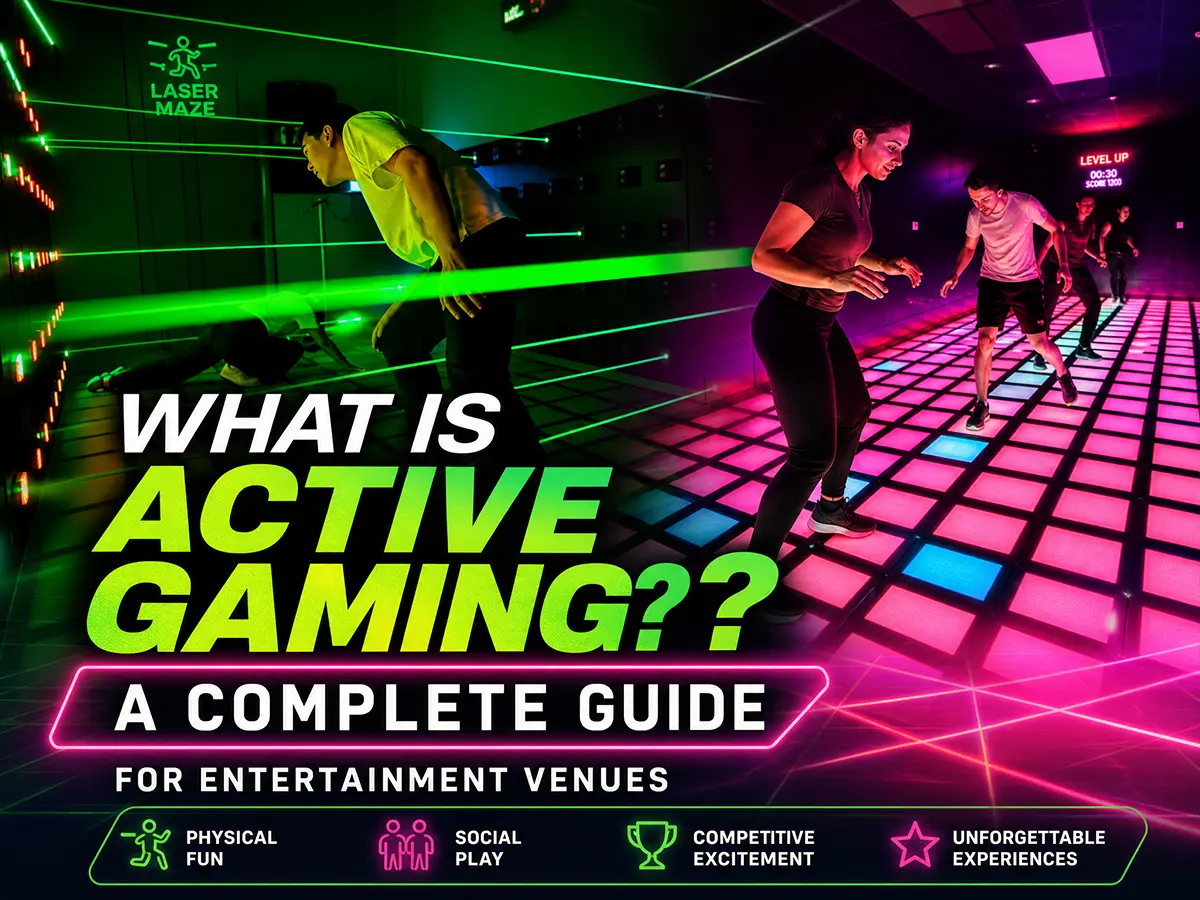
In recent years, we have seen more FEC operators, mall developers, and entertainment investors explore active gaming as a new attraction category. However, choosing the right system requires a clear understanding of how active gaming works and where it fits in a commercial venue.
Active gaming describes a new generation of entertainment attractions that combine physical movement with digital gameplay. Unlike traditional arcade equipment, these systems turn player actions into interactive experiences through sensors, software, and real-time feedback.
For some people, active gaming simply means games that require movement. For commercial operators, however, the concept goes further. Active gaming refers to entertainment systems where physical movement becomes part of the gameplay itself.
Instead of controlling a game only through buttons or a joystick, players interact with the attraction through actions such as stepping, jumping, reacting, throwing, climbing, or competing. Sensors and interactive technology then convert these movements into digital responses through lighting, sound, scoring, and game content.
For family entertainment centers, shopping malls, amusement projects, and sports entertainment venues, active gaming solutions create experiences that are more social, more visible, and more suitable for repeat visits compared with many traditional attractions.
This guide explains what active gaming is, how it works, the main system categories, and what buyers should consider when selecting an active entertainment solution.
What Is Active Gaming?
Active gaming is a commercial entertainment format that combines physical interaction with digital gameplay.
The key difference between active gaming and traditional video games is that the player’s body becomes part of the control system. The environment itself becomes interactive, allowing guests to participate instead of simply watching a screen.
A complete active gaming system usually includes three parts: interactive hardware, game software, and digital content. The hardware detects player actions, the software processes those actions, and the content creates different challenges, competitions, and experiences.
From a venue operator’s perspective, active gaming is not just a single piece of equipment. It is an attraction solution designed around customer engagement, space utilization, and long-term operation.
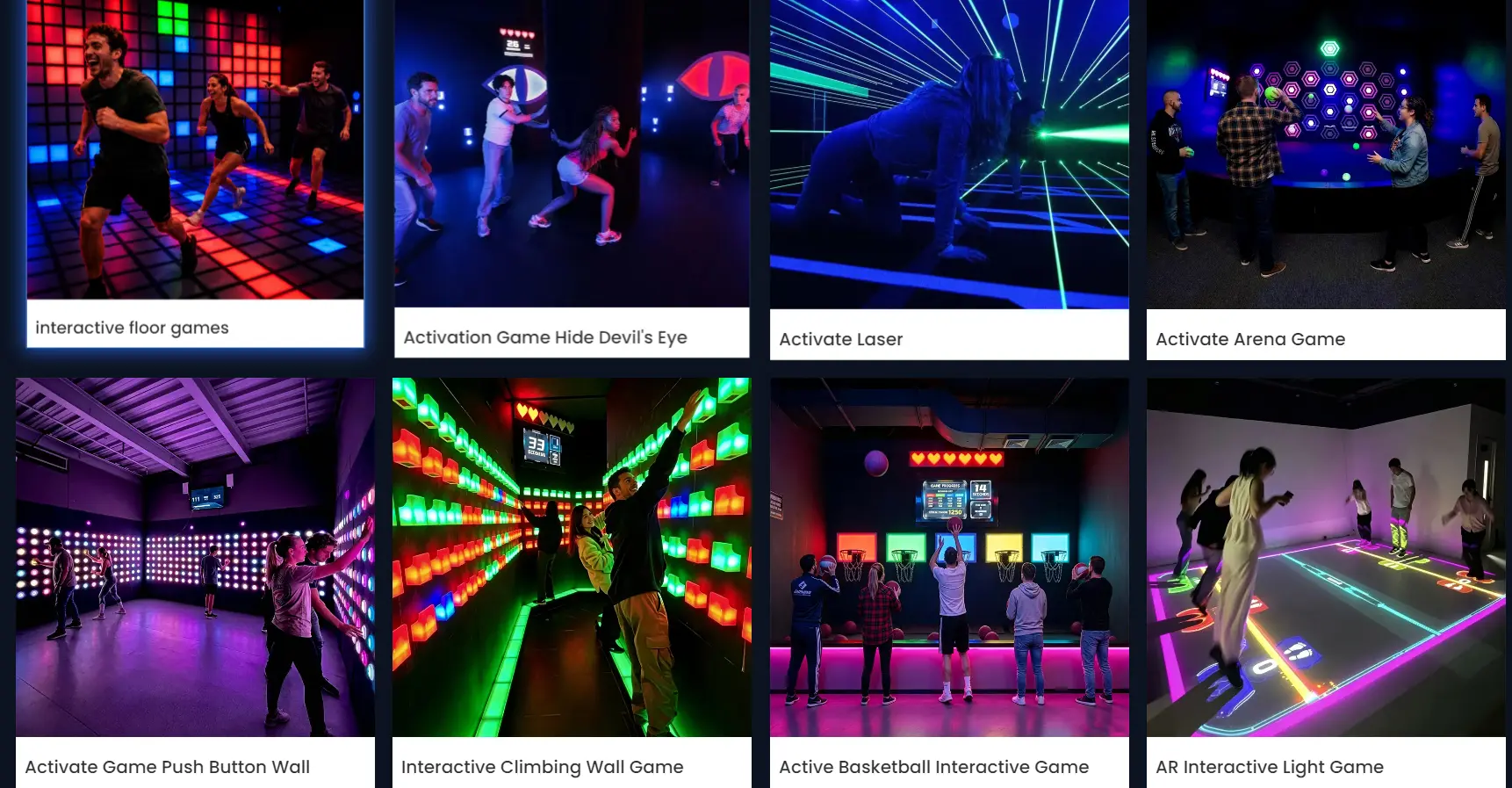
Today, active gaming includes multiple formats such as interactive floor games, reaction challenge rooms, laser-based attractions, interactive sports systems, climbing games, and AR-based experiences.
For operators evaluating a new attraction, understanding the difference between these categories is important because each format serves different audiences and business models.
How Active Gaming Works?
Most active gaming systems follow a simple interaction process.
The experience begins when the system creates a visual or audio challenge. This may come from LED floors, interactive walls, lighting effects, projection surfaces, or digital targets.
Players then respond physically. They may step on specific areas, avoid obstacles, hit targets, complete movements, or compete against other players.
Sensors capture these actions in real time. Depending on the system design, this may involve pressure detection, infrared sensors, cameras, motion tracking, or embedded interactive components.
The system then provides immediate feedback through scores, sound effects, lighting changes, and different levels of difficulty.
This fast response cycle is one of the reasons active gaming performs well in commercial environments. Guests usually understand the experience quickly, which reduces onboarding time and helps venues maintain better visitor flow.
Active Gaming vs Traditional Arcade Games
Active gaming and traditional arcade equipment can both create entertainment value, but they provide very different customer experiences.
| Category | Traditional Arcade Games | Active Gaming Systems |
|---|---|---|
| Player interaction | Buttons, joystick, touchscreen | Body movement and physical interaction |
| Experience style | Screen-based gameplay | Interactive environment |
| Main users | Individual players or small groups | Families, groups, teams |
| Space usage | Individual machine footprint | Flexible attraction zones |
| Replay value | Mainly based on game content | Based on content, competition, and physical challenges |
Traditional arcade machines remain valuable for high-density entertainment areas. However, active gaming creates stronger social interaction because multiple players can participate together in the same experience.
This makes active gaming especially suitable for venues that want attractions with higher visibility and stronger customer engagement.
Types of Active Gaming Systems
Active gaming is a broad category with different solutions designed for different venue requirements.
Interactive Floor Games
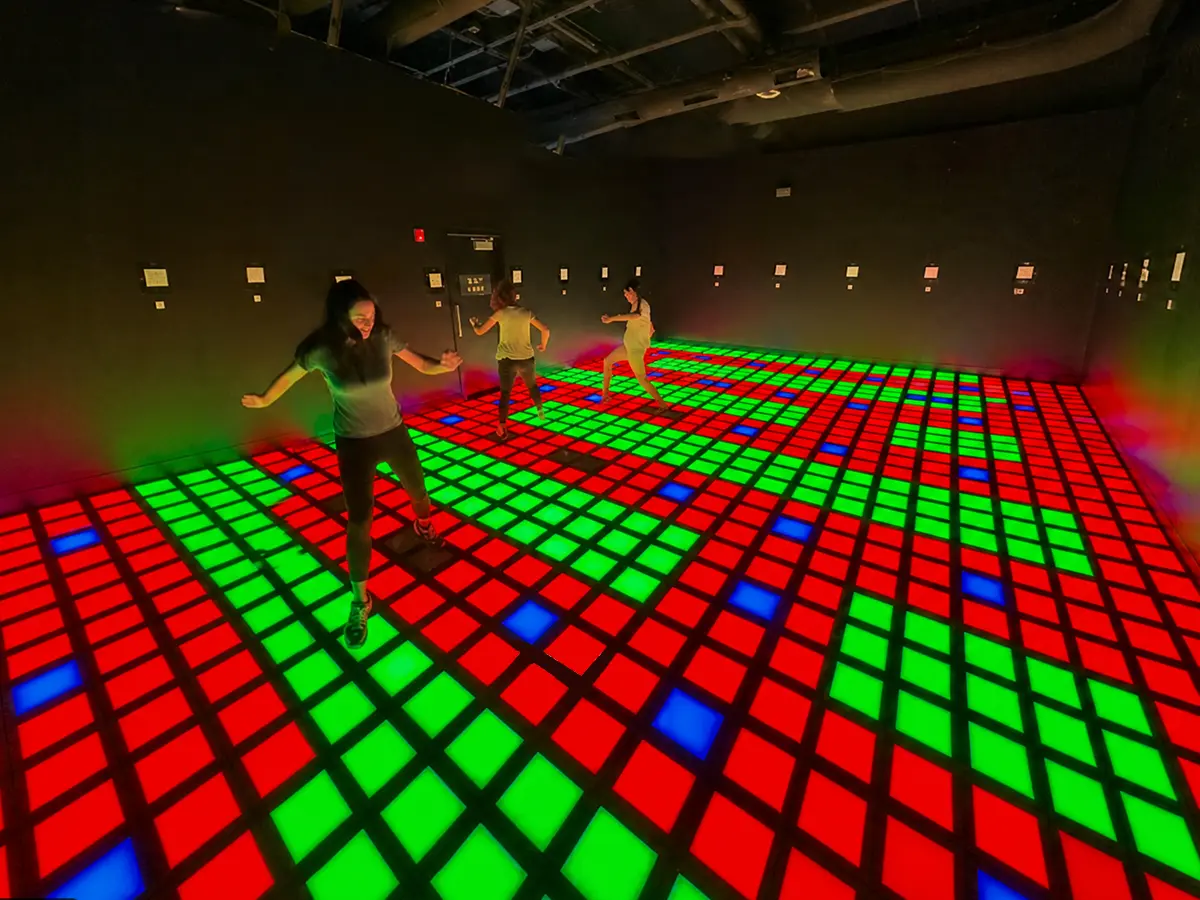
Interactive floor games are one of the most recognized forms of active gaming.
These systems transform the floor surface into an interactive playground where players can move, react, and compete. By combining interactive tiles, sensors, and digital content, they create experiences that are easy to understand for both children and adults.
For commercial venues, interactive floor games are popular because they can provide strong visual attraction while supporting multiple players in a relatively flexible space.
When selecting an interactive floor solution, buyers should evaluate more than appearance. Hardware durability, safety design, replacement convenience, game library size, and software support all influence long-term operation.
You can learn more about commercial applications and technology differences in our guide to interactive floor games vs projection games.
Reaction Challenge Rooms
Reaction-based attractions create dedicated spaces where players complete physical challenges.
These systems may include laser challenges, interactive walls, and competitive reaction games. They are especially popular with teenagers, young adults, and group customers because they encourage teamwork and competition.
For operators, one of the biggest advantages is flexibility. A single installation can support multiple game modes, allowing the attraction to stay fresh without major hardware changes.
Interactive Sports and Digital Experiences
Active gaming can also combine digital technology with familiar physical activities.
Interactive basketball games, climbing systems, and sports-based challenges allow guests to compete through skill, speed, and accuracy.
These attractions are valuable for venues that want to create a more active customer experience while still maintaining the entertainment elements of digital scoring and competition.
Why Venues Invest in Active Gaming Solutions
The value of active gaming goes beyond the technology itself.
Modern entertainment customers increasingly look for experiences they can share with friends and family. Active gaming supports this demand by creating attractions that encourage participation rather than passive viewing.
For operators, active gaming can improve space efficiency because one attraction can support multiple players and different game formats.
Replay value is another important factor. Unlike some attractions that are mainly designed for a single experience, active gaming systems can continue attracting customers through different challenges, competitive modes, and updated content.
Successful projects also depend on reliable equipment and supplier support. Commercial buyers should evaluate product quality, maintenance requirements, software updates, and installation experience before making an investment.
Explore more about complete configurations through AMA GAME’s active gaming solutions.
How to Choose an Active Gaming System
Choosing the right active gaming solution depends on several practical factors.
The first consideration is available space. Smaller areas may be suitable for interactive floor games, while larger venues may benefit from combining multiple attraction formats.
The target audience is also important. Family entertainment centers may prioritize easy-to-learn experiences, while teen-focused venues may require more competitive challenges.
Operators should also consider long-term operation. A successful attraction requires not only reliable hardware but also continuous content support and the ability to update experiences over time.
Working with an experienced manufacturer can help reduce project risks by providing guidance on layout planning, customization, installation, and after-sales support.
What Makes a Reliable Active Gaming Manufacturer?
For commercial projects, choosing the right manufacturer is as important as choosing the attraction itself.
A professional active gaming manufacturer should understand the requirements of real entertainment venues, including durability, safety, installation efficiency, and long-term maintenance.
AMA GAME develops active gaming systems for entertainment projects worldwide, providing solutions including interactive floor games, challenge attractions, and customized interactive experiences.
Our experience in amusement equipment manufacturing helps operators evaluate not only the initial installation but also long-term operating performance.
Learn more about AMA GAME and our entertainment equipment experience through our official company page.
The Future of Active Entertainment
Active entertainment is moving toward more integrated attraction environments.
Instead of operating isolated machines, more venues are creating complete interactive zones that combine different experiences, including floor interaction, reaction challenges, sports games, and digital entertainment.
As technology develops, software updates and content management will become increasingly important. Operators will focus not only on how attractive an installation looks at launch but also on how effectively it can continue engaging customers over time.
For commercial buyers, the future of active gaming will depend on combining reliable hardware, creative content, and strong operational planning.
Conclusion
Active gaming is a movement-based entertainment category that combines physical participation with digital interaction.
By turning the player into part of the experience, active gaming creates more social, interactive, and replayable attractions than traditional screen-based entertainment.
For FEC operators, shopping malls, and entertainment investors, active gaming solutions provide new opportunities to improve customer engagement and create modern attraction spaces.
When selecting an active gaming system, buyers should evaluate technology, reliability, content support, and manufacturer experience.
AMA GAME provides commercial active gaming solutions designed for entertainment projects worldwide, including interactive floor games and customized active entertainment systems.
FAQ
What is active gaming?
Active gaming is an entertainment format where players use physical movement to control digital gameplay through interactive technology.
How is active gaming different from arcade games?
Traditional arcade games mainly rely on controllers, while active gaming uses body movement as part of the game experience.
What are the most common active gaming systems?
Common systems include interactive floor games, reaction challenge rooms, interactive sports games, climbing systems, and AR-based experiences.
Is active gaming suitable for FECs and shopping malls?
Yes. Active gaming is widely used in FECs, malls, indoor playgrounds, and entertainment projects because it supports group play and repeat visits.
What should buyers consider when choosing an active gaming supplier?
Buyers should evaluate equipment quality, software support, customization ability, installation experience, and after-sales service.